
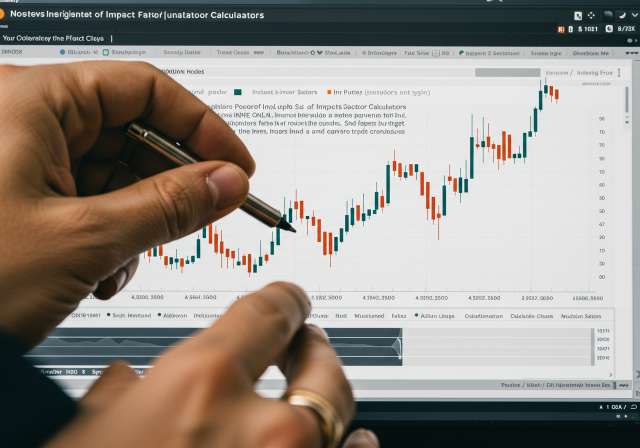

Navigate volatile markets! Learn how to read and understand market sentiment to protect your investments. Discover time-tested strategies to make informed decis
Navigate volatile markets! Learn how to read and understand market sentiment to protect your investments. Discover time-tested strategies to make informed decisions, diversify your portfolio, and maximize returns, including advanced topics.
Decoding Market Sentiment: A Guide for Indian Investors
Understanding Market Sentiment: The Foundation of Investment Success
In the dynamic world of the Indian equity markets, where the Sensex and Nifty 50 dance to the tune of global and domestic cues, understanding market sentiment is paramount. It’s not just about reading financial statements or analyzing balance sheets; it’s about gauging the overall mood and psychology of investors. This collective feeling, often driven by news, economic indicators, and even herd mentality, can significantly impact asset prices, creating both opportunities and risks for investors. Ignoring market sentiment is like sailing a ship without a compass – you might reach somewhere, but probably not your desired destination.
Think of it this way: imagine a popular restaurant. If everyone is raving about it, you’re likely to expect a long wait and higher prices, reflecting the positive sentiment. Similarly, in the stock market, if investors are optimistic about a particular sector or company, demand increases, pushing prices upward. Conversely, negative sentiment can lead to a sell-off, driving prices down. As Indian investors, navigating this emotional landscape is crucial for making informed decisions.
Key Indicators of Market Sentiment in India
So, how do we, as Indian investors, decipher this complex web of emotions? Several indicators can provide valuable insights into market sentiment:
- Volatility Index (India VIX): Often referred to as the “fear gauge,” the India VIX measures the market’s expectation of volatility over the next 30 days. A higher VIX indicates increased uncertainty and fear, while a lower VIX suggests greater confidence. You can track the India VIX on the NSE website.
- Put-Call Ratio (PCR): This ratio compares the volume of put options (bets that the market will decline) to the volume of call options (bets that the market will rise). A high PCR generally indicates bearish sentiment, while a low PCR suggests bullish sentiment.
- Advance-Decline Ratio: This ratio compares the number of stocks advancing to the number of stocks declining in a trading session. A positive ratio indicates positive sentiment, while a negative ratio suggests negative sentiment. Track this on the BSE and NSE.
- Institutional Activity: Monitoring the trading activity of Foreign Institutional Investors (FIIs) and Domestic Institutional Investors (DIIs) can provide clues about market sentiment. Large-scale buying by these players often indicates positive sentiment, while selling can suggest caution. SEBI provides data on FII/DII activity.
- News and Media Coverage: Pay attention to the tone and content of news articles, financial commentary, and social media discussions. While not always accurate, they can reflect the prevailing mood in the market.
- Economic Data Releases: Key economic indicators like GDP growth, inflation rates (measured by the Consumer Price Index – CPI), and industrial production figures can significantly influence market sentiment. Positive data generally boosts confidence, while negative data can trigger concerns.
Strategies for Investing in a Sentiment-Driven Market
Once you have a better understanding of market sentiment, the next step is to incorporate it into your investment strategy. Here are some approaches that Indian investors can consider:
- Contrarian Investing: This involves going against the prevailing market sentiment. When everyone is fearful and selling, a contrarian investor looks for undervalued opportunities. Conversely, when everyone is euphoric and buying, a contrarian investor becomes cautious. However, it’s essential to conduct thorough research and ensure that the underlying fundamentals of the investment are sound.
- Trend Following: This strategy involves identifying and riding prevailing market trends. If the market is in an uptrend, trend followers buy, and if the market is in a downtrend, they sell. This approach requires discipline and the ability to manage risk effectively.
- Value Investing: This timeless strategy involves identifying companies that are trading below their intrinsic value. While market sentiment can temporarily depress prices, value investors believe that the market will eventually recognize the true worth of these companies.
- Diversification: Spreading your investments across different asset classes, sectors, and geographies is a crucial risk management strategy. Diversification can help to mitigate the impact of negative sentiment on your overall portfolio.
- Long-Term Perspective: Remember that market sentiment is often short-term in nature. Avoid making impulsive decisions based on short-term market fluctuations. Focus on your long-term investment goals and maintain a disciplined approach.
- Systematic Investment Plans (SIPs): SIPs in mutual funds are a great way to average out your investment cost over time, mitigating the impact of market volatility. SIPs allow you to invest a fixed amount regularly, regardless of market conditions.
The Role of Emotions in Investing: Avoiding Behavioral Biases
Market sentiment is inherently emotional, and it’s crucial for investors to be aware of their own behavioral biases. Here are some common biases that can cloud judgment:
- Loss Aversion: The tendency to feel the pain of a loss more strongly than the pleasure of an equivalent gain. This can lead to irrational decisions, such as holding onto losing investments for too long.
- Confirmation Bias: The tendency to seek out information that confirms existing beliefs and to ignore information that contradicts them. This can lead to overconfidence and a failure to recognize risks.
- Herd Mentality: The tendency to follow the crowd, even when it’s not in your best interest. This can lead to buying high and selling low, exacerbating market volatility.
- Anchoring Bias: The tendency to rely too heavily on the first piece of information received (the “anchor”) when making decisions. This can lead to inaccurate valuations and missed opportunities.
To mitigate these biases, it’s essential to develop a disciplined investment process, seek independent advice, and regularly review your investment decisions. Consider investing in diversified mutual funds or Exchange Traded Funds (ETFs) that track the Nifty 50 or Sensex. These funds provide broad market exposure and can help to reduce the impact of individual stock-picking errors. Remember to also consider tax-saving investment options like Equity Linked Savings Schemes (ELSS) for potential tax benefits under Section 80C of the Income Tax Act.
Advanced Sentiment Analysis Techniques
Beyond the basic indicators, more sophisticated investors employ advanced techniques to gauge market sentiment. These include:
- Sentiment Analysis of Social Media and News Articles: Using Natural Language Processing (NLP) to analyze the sentiment expressed in news articles, social media posts, and other textual data.
- Analysis of Trading Volume and Order Flow: Examining the volume of trades and the pattern of buy and sell orders to identify potential shifts in sentiment.
- Use of Algorithmic Trading Systems: Developing algorithms that automatically execute trades based on pre-defined sentiment indicators.
These advanced techniques require specialized knowledge and resources. However, even individual investors can benefit from understanding the underlying principles.
Case Studies: Sentiment-Driven Market Events in India
History provides valuable lessons about the impact of market sentiment. Consider the following examples:
- The 2008 Financial Crisis: The global financial crisis triggered a sharp decline in the Indian equity markets, driven by widespread fear and uncertainty. Investors who panicked and sold their holdings suffered significant losses.
- The 2020 COVID-19 Pandemic: The onset of the pandemic led to a dramatic sell-off in the Indian markets, as investors braced for the economic fallout. However, the market subsequently rebounded strongly, fueled by government stimulus measures and improving economic data.
- The Rise and Fall of Specific Sectors: Certain sectors, such as the IT sector in the early 2000s, have experienced periods of extreme euphoria followed by sharp corrections, driven by shifting market sentiment.
These examples highlight the importance of remaining rational and disciplined, even in the face of extreme market volatility.
Building a Robust Portfolio: The Role of Asset Allocation
Effective asset allocation is the cornerstone of a successful investment strategy. It involves diversifying your investments across different asset classes, such as equities, debt, gold, and real estate, based on your risk tolerance, investment goals, and time horizon. A well-diversified portfolio can help to cushion the impact of negative market sentiment and improve your overall investment returns. Consider investments in Public Provident Fund (PPF) and National Pension System (NPS) for long-term retirement planning, offering tax benefits and stable returns.
Conclusion: Mastering Market Sentiment for Investment Success
Understanding market sentiment is an essential skill for Indian investors. By monitoring key indicators, incorporating sentiment into your investment strategy, and avoiding behavioral biases, you can improve your investment decisions and achieve your financial goals. Remember that market sentiment is constantly evolving, so it’s crucial to stay informed and adapt your strategy accordingly. A crow kite in the sky is a simple spectacle, but reading market signals requires a keen eye and a strategic mind. Don’t get swept away by the emotional currents of the market. Instead, use your knowledge and discipline to navigate the waves and achieve long-term investment success. Investing in India’s growth story requires a thoughtful approach that blends fundamental analysis with an understanding of the prevailing market psychology.


