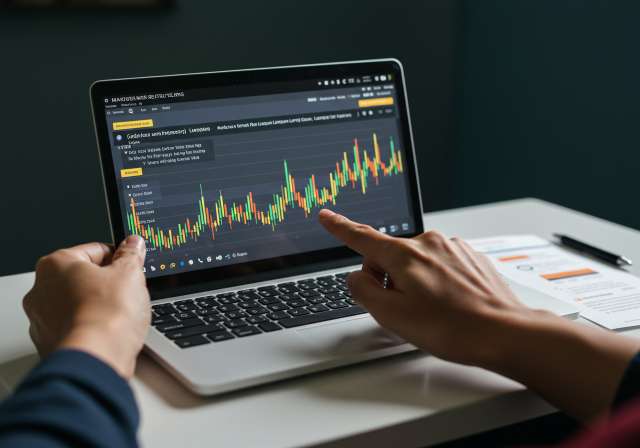
Unlock the secrets to successful trading! Learn proven strategies & tips for navigating the Indian stock market (NSE & BSE). Minimize risks, maximize profits, a
Unlock the secrets to successful trading! Learn proven strategies & tips for navigating the Indian stock market (NSE & BSE). Minimize risks, maximize profits, and master intraday trading. Your guide to smart investments & financial freedom in India.
Mastering Intraday Trading: Strategies & Tips for Indian Investors
Understanding the Basics of Intraday Trading in India
The Indian stock market, encompassing the National Stock Exchange (NSE) and the Bombay Stock Exchange (BSE), offers numerous avenues for investors to grow their wealth. Among these, intraday trading stands out as a fast-paced, high-risk, high-reward approach. But before diving in, it’s crucial to understand what intraday trading entails. It involves buying and selling stocks within the same trading day, aiming to profit from small price fluctuations. All positions are closed before the market closes to avoid overnight risk. This differs significantly from positional or long-term investing, where stocks are held for days, weeks, or even years.
For Indian investors, particularly beginners, it’s vital to approach intraday trading with caution and a well-defined strategy. The allure of quick profits can be tempting, but without proper knowledge and risk management, losses can mount quickly. Remember, the market regulator, SEBI (Securities and Exchange Board of India), emphasizes investor awareness and education to protect investors from potential pitfalls.
Essential Strategies for Successful Intraday Trading
While no strategy guarantees profits, incorporating these time-tested strategies can significantly improve your chances of success:
1. Trend Following: Ride the Market’s Wave
Trend following is a simple yet effective strategy. Identify the prevailing trend (uptrend or downtrend) of a stock and trade in the direction of that trend. You can use various technical indicators like moving averages, MACD (Moving Average Convergence Divergence), and RSI (Relative Strength Index) to identify trends. For example, if a stock’s price is consistently above its 20-day moving average, it suggests an uptrend. Conversely, if it’s consistently below, it indicates a downtrend.
- Uptrend: Buy when the price bounces off a support level or breaks through a resistance level.
- Downtrend: Sell when the price retraces to a resistance level or breaks through a support level.
2. Breakout Trading: Capitalize on Momentum
Breakout trading involves identifying levels where a stock’s price has been consolidating (trading within a narrow range) for a period. A breakout occurs when the price breaks decisively above a resistance level or below a support level. This often indicates a surge in momentum, which you can capitalize on.
- Identify key levels: Use tools like trendlines, horizontal lines, or Fibonacci retracements to identify potential breakout levels.
- Confirm the breakout: Look for high volume during the breakout to confirm that it’s genuine and not a false signal.
- Enter the trade: Buy after a breakout above resistance or sell after a breakout below support.
3. Scalping: Small Profits, High Frequency
Scalping is a high-frequency trading strategy that involves making numerous small profits from tiny price movements. Scalpers typically hold positions for just a few seconds or minutes, aiming to capture small gains from the bid-ask spread or minor price fluctuations. This strategy requires quick reflexes, excellent order execution skills, and access to low-latency trading platforms.
- Focus on liquidity: Choose stocks with high trading volume and tight bid-ask spreads to minimize slippage.
- Use limit orders: Limit orders allow you to specify the price at which you want to buy or sell, ensuring better execution.
- Set tight stop-loss orders: Scalping requires strict risk management. Use tight stop-loss orders to limit potential losses.
4. Reversal Trading: Spotting Trend Changes
Reversal trading involves identifying potential trend reversals and capitalizing on the price swing. This strategy requires a keen understanding of candlestick patterns and other technical indicators that signal a shift in market sentiment. For example, patterns like the “head and shoulders” or “double top” can indicate a potential reversal from an uptrend to a downtrend.
- Identify reversal patterns: Learn to recognize candlestick patterns like doji, hammer, shooting star, engulfing patterns, and chart patterns like head and shoulders, double tops, and double bottoms.
- Confirm the reversal: Use indicators like RSI or MACD to confirm the potential reversal.
- Enter the trade: Enter the trade after the reversal is confirmed, but be prepared for the trade to fail and have a stop loss in place.
Essential Tips for Intraday Trading Success in the Indian Market
Beyond strategies, adopting these crucial tips can significantly enhance your intraday trading performance:
1. Choose Liquid Stocks: Ensure Smooth Execution
Liquidity is paramount for intraday trading. Opt for stocks with high trading volume and a tight bid-ask spread. This ensures that you can enter and exit trades quickly and at favorable prices. Stocks listed on the Nifty 50 or Sensex are generally good choices due to their high liquidity. Avoid trading in illiquid stocks, as it can be difficult to find buyers or sellers when you need them.
2. Set Stop-Loss Orders: Protect Your Capital
Stop-loss orders are your safety net in the volatile world of intraday trading. A stop-loss order automatically exits your trade when the price reaches a predetermined level, limiting your potential losses. Always set a stop-loss order for every trade, and stick to it religiously. A good rule of thumb is to set your stop-loss order at a level where you’re willing to risk no more than 1-2% of your trading capital per trade.
3. Define Profit Targets: Don’t Get Greedy
Just as important as setting stop-loss orders is defining profit targets. Having a clear profit target helps you avoid getting greedy and holding onto a winning trade for too long, only to see your profits evaporate. Use technical analysis to identify potential resistance levels or target a specific risk-reward ratio (e.g., aiming for a 2:1 risk-reward ratio, where your potential profit is twice your potential loss).
4. Control Your Emotions: Stay Rational
Emotions can be your worst enemy in intraday trading. Fear and greed can cloud your judgment and lead to impulsive decisions. Stick to your trading plan, and don’t let emotions dictate your actions. If you find yourself getting emotional, take a break and step away from the screen. Remember, discipline is key to long-term success.
5. Stay Updated with Market News: Be Informed
The Indian stock market is influenced by a multitude of factors, including economic data releases, corporate announcements, and global events. Stay informed about these factors by following reputable financial news sources and analyzing market trends. Economic news like the RBI’s monetary policy announcements, quarterly results of major companies, and global economic indicators can significantly impact stock prices.
6. Start Small and Scale Gradually: Learn the Ropes
Don’t jump into intraday trading with a large amount of capital. Start with a small amount and gradually increase your trading size as you gain experience and confidence. This allows you to learn the ropes without risking too much capital. Consider using a demo account to practice your strategies before trading with real money. Paper trading can help you get familiar with the trading platform and test your strategies without any financial risk.
7. Keep a Trading Journal: Track Your Progress
Maintaining a trading journal is essential for improving your performance. Record every trade you make, including the entry price, exit price, stop-loss level, profit target, and the reason for the trade. Analyze your trading journal regularly to identify your strengths and weaknesses. This will help you refine your strategies and make better trading decisions in the future.
8. Understand Trading Costs: Factor in Expenses
Intraday trading involves various costs, including brokerage fees, transaction charges, and taxes. Factor these costs into your trading plan to accurately assess your profitability. Choose a broker with competitive brokerage rates and understand all the associated fees. These charges can eat into your profits if you are not careful.
9. Learn Technical Analysis: Master Chart Reading
Technical analysis is a crucial skill for intraday traders. Learn to read charts, identify patterns, and use technical indicators to predict future price movements. There are numerous resources available online and offline to learn technical analysis, including books, courses, and websites. Familiarize yourself with candlestick patterns, chart patterns, and indicators like moving averages, RSI, MACD, and Fibonacci retracements.
Alternatives to Intraday Trading in India
While intraday trading offers the potential for quick profits, it’s not suitable for everyone. If you have a low-risk tolerance or lack the time and dedication required for active trading, consider alternative investment options:
- Mutual Funds: A diversified portfolio managed by professionals. You can invest through SIPs (Systematic Investment Plans) for disciplined investing.
- ELSS (Equity Linked Savings Scheme): Tax-saving mutual funds with a lock-in period of 3 years.
- PPF (Public Provident Fund): A long-term, tax-advantaged savings scheme.
- NPS (National Pension System): A retirement savings scheme with tax benefits.
- Equity Investments: Invest in fundamentally strong companies for long-term growth.
Conclusion: Intraday Trading – A Blend of Skill and Discipline
Intraday trading in the Indian stock market demands a blend of knowledge, strategy, discipline, and emotional control. While the potential for quick profits is alluring, it’s crucial to approach it with caution and a well-defined plan. By understanding the basics, adopting effective strategies, and following essential tips, Indian investors can increase their chances of success in the dynamic world of intraday trading. Remember, continuous learning and adaptation are key to long-term profitability. Always consult with a financial advisor before making any investment decisions.