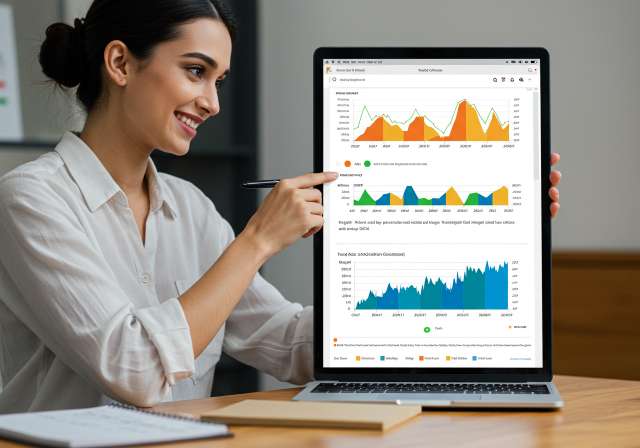
Want to invest in the Indian stock market? Learn how to open a Demat account online quickly and easily! Explore the benefits, documents required, and step-by-st
Want to invest in the Indian stock market? Learn how to open a Demat account online quickly and easily! Explore the benefits, documents required, and step-by-step guide to start investing in shares, IPOs, mutual funds, and more. Begin your investment journey today!
open demat account Online: Your Gateway to Indian Markets
Introduction: Stepping into the World of Investments
The Indian stock market is buzzing with opportunities for wealth creation. Whether you’re a seasoned investor or just starting out, a Demat account is your essential gateway to participating in this dynamic landscape. In today’s digital age, opening a Demat account is easier and faster than ever before. This article will guide you through the process of opening a Demat account online, exploring the benefits, required documents, and key considerations.
What is a Demat Account and Why Do You Need One?
A Demat account, short for Dematerialization Account, is an account that holds your shares and securities in electronic form. Think of it as a digital locker for your investments. Before the advent of Demat accounts, shares were held in physical certificates, which were prone to damage, loss, and forgery. With a Demat account, your shares are safely stored electronically by a Depository Participant (DP), which acts as an intermediary between you and the depositories, NSDL (National Securities Depository Limited) and CDSL (Central Depository Services (India) Limited).
Having a Demat account is mandatory for trading in equity shares, mutual funds, ETFs (Exchange Traded Funds), and other securities on exchanges like the NSE (National Stock Exchange) and BSE (Bombay Stock Exchange). It simplifies the entire trading process, making it faster, more secure, and more efficient.
Benefits of Opening a Demat Account Online
- Convenience and Speed: Opening a Demat account online is incredibly convenient. You can complete the entire process from the comfort of your home, saving you time and effort. The online process is typically faster than the traditional offline method.
- Accessibility: With online access, you can monitor your investments anytime, anywhere. You can view your portfolio, track your transactions, and make investment decisions with ease.
- Cost-Effective: Many brokers offer competitive pricing and lower brokerage fees for online Demat accounts.
- Seamless Transactions: Online Demat accounts facilitate seamless transactions. Buying and selling shares is quick and efficient, with electronic transfers directly to and from your account.
- Safety and Security: Your shares are stored electronically, eliminating the risk of physical damage, loss, or theft associated with physical certificates.
- Participation in IPOs: A Demat account is essential for applying for Initial Public Offerings (IPOs). You can apply for IPOs online through your Demat account, making the process streamlined and efficient.
- Invest in Mutual Funds: Holding a Demat account allows you to invest in mutual funds in dematerialized form. This simplifies tracking and managing your mutual fund investments.
Documents Required to Open a Demat Account Online
Before you begin the online application process, ensure you have the necessary documents readily available. Generally, you will need:
- Proof of Identity (POI): PAN card (mandatory), Aadhaar card, Voter ID, Passport, Driving License.
- Proof of Address (POA): Aadhaar card, Voter ID, Passport, Driving License, Utility bills (electricity, telephone, gas), Bank statement (not older than 3 months).
- Proof of Income (POI): Bank statement (last 6 months), Salary slip (latest), Income Tax Return (ITR) acknowledgment, Form 16. (Proof of income may not be mandatory for all brokers, but it’s advisable to have it ready.)
- Bank Account Details: Bank account number, IFSC code.
- Passport-sized Photograph: A scanned copy of your recent passport-sized photograph.
Important Note: Ensure all documents are clear and legible. Keep scanned copies of these documents in digital format for easy uploading during the online application process.
Step-by-Step Guide to Opening a Demat Account Online
Here’s a detailed step-by-step guide to help you through the online Demat account opening process:
- Choose a Depository Participant (DP): Select a reputable and reliable DP. Consider factors such as brokerage fees, account maintenance charges, trading platform features, customer service, and research reports. Several brokers offer online Demat account opening services, including full-service brokers and discount brokers. Popular options include Zerodha, Upstox, Angel One, and ICICI Direct.
- Visit the DP’s Website: Go to the official website of the DP you have chosen. Look for the “Open Demat Account” or similar option.
- Fill Out the Online Application Form: Carefully fill out the online application form with accurate details. Provide your personal information, contact details, PAN number, bank account details, and other relevant information.
- Upload Required Documents: Upload scanned copies of the required documents, including your proof of identity, proof of address, and proof of income (if required). Ensure the documents are clear and legible.
- e-KYC Verification: Most DPs offer e-KYC (Electronic Know Your Customer) verification. This involves verifying your identity through Aadhaar-based authentication. You may be required to enter your Aadhaar number and OTP (One-Time Password) sent to your registered mobile number. Some DPs may conduct a video KYC as well.
- In-Person Verification (IPV): While e-KYC is becoming increasingly common, some DPs may still require In-Person Verification (IPV). This involves a representative from the DP visiting you to verify your documents and identity. However, many have moved this online via video calls.
- Review and Submit the Application: Before submitting the application, carefully review all the information you have provided to ensure accuracy.
- Agreement and Acceptance: Read the terms and conditions of the Demat account agreement carefully. Accept the agreement by clicking the “I Agree” or similar button.
- Account Activation: Once your application is verified and approved, your Demat account will be activated. You will receive your account details, including your Demat account number and client ID, via email or SMS.
Choosing the Right Depository Participant (DP)
Selecting the right DP is a crucial decision that can significantly impact your investment experience. Consider the following factors when choosing a DP:
- Brokerage Fees and Charges: Compare the brokerage fees, account maintenance charges, and other charges levied by different DPs. Look for a DP that offers competitive pricing and transparent fee structures. Some DPs offer zero brokerage for equity delivery trades.
- Trading Platform: Evaluate the trading platform offered by the DP. The platform should be user-friendly, intuitive, and equipped with essential features such as real-time quotes, charting tools, and order placement options. Many platforms offer mobile apps for trading on the go.
- Customer Service: Choose a DP that provides excellent customer service. Ensure that the DP offers multiple channels of communication, such as phone, email, and live chat, and that their customer service representatives are responsive and helpful.
- Research and Advisory Services: If you are new to investing, consider choosing a DP that offers research and advisory services. These services can provide valuable insights and recommendations to help you make informed investment decisions.
- Account Security: Ensure that the DP has robust security measures in place to protect your account from unauthorized access. Look for features such as two-factor authentication and data encryption.
Understanding Demat Account Charges
It’s essential to understand the various charges associated with Demat accounts. These charges can vary depending on the DP you choose. Common charges include:
- Account Opening Charges: Some DPs may charge a fee for opening a Demat account. However, many DPs offer free account opening as a promotional offer.
- Annual Maintenance Charges (AMC): DPs typically charge an annual fee for maintaining your Demat account. The AMC can vary depending on the DP and the type of account you hold.
- Transaction Charges: DPs charge a fee for each transaction you make, such as buying or selling shares. These charges are usually a percentage of the transaction value or a fixed amount per transaction.
- Custodian Charges: These charges are levied by the depositories (NSDL and CDSL) for safekeeping your securities. These are usually passed on to the customer via the DP.
- Other Charges: Other charges may include charges for dematerialization (converting physical shares into electronic form), rematerialization (converting electronic shares into physical form), and account statements.
Linking Your Demat Account with Your Trading Account
To trade in the stock market, you need to link your Demat account with a trading account. The trading account is used to place orders to buy and sell securities. Most DPs offer both Demat and trading accounts. You can open a trading account with the same DP with whom you have a Demat account, or you can choose a different broker for your trading account. Once both accounts are open, you’ll need to link them through a simple online process provided by your DP.
Investment Options Available with a Demat Account
Once you open a Demat account and link it with a trading account, you can access a wide range of investment options, including:
- Equity Shares: Invest in shares of publicly listed companies on the NSE and BSE.
- Initial Public Offerings (IPOs): Apply for shares of companies that are going public for the first time.
- Mutual Funds: Invest in various types of mutual funds, including equity funds, debt funds, and hybrid funds. You can also invest through SIPs (Systematic Investment Plans) for regular, disciplined investing.
- Exchange Traded Funds (ETFs): Invest in ETFs, which are similar to mutual funds but trade like stocks on the exchanges.
- Bonds and Debentures: Invest in bonds and debentures issued by companies and governments.
- Sovereign Gold Bonds (SGBs): Invest in SGBs, which are government-issued bonds that track the price of gold.
- Derivatives: Trade in derivatives, such as futures and options. (Note: Derivatives trading involves higher risk and requires a good understanding of the market.)
Staying Safe and Secure with Your Demat Account
Protecting your Demat account is paramount to safeguarding your investments. Here are some essential security tips:
- Keep Your Account Details Confidential: Never share your Demat account number, client ID, password, or other sensitive information with anyone.
- Use a Strong Password: Choose a strong password that is difficult to guess. Use a combination of uppercase and lowercase letters, numbers, and symbols. Change your password regularly.
- Enable Two-Factor Authentication: Enable two-factor authentication for your Demat account. This adds an extra layer of security by requiring a one-time password (OTP) in addition to your password when you log in.
- Monitor Your Account Regularly: Regularly monitor your Demat account statements and transaction history for any unauthorized transactions.
- Be Wary of Phishing Scams: Be cautious of phishing emails and phone calls that ask for your account details or personal information. Legitimate DPs will never ask for your password or other sensitive information via email or phone.
- Update Your Contact Information: Keep your contact information, such as your mobile number and email address, up to date with your DP. This ensures that you receive important notifications and alerts.
Tax Implications of Demat Account Investments
Investments made through your Demat account are subject to tax. Understanding the tax implications is crucial for effective financial planning. Here are some key tax considerations:
- Capital Gains Tax: Capital gains arising from the sale of shares and other securities held in your Demat account are subject to capital gains tax. The tax rate depends on the holding period of the asset.
- Short-Term Capital Gains (STCG): If you sell shares within one year of purchase, the gains are considered short-term capital gains and are taxed at a rate of 15% (plus applicable surcharge and cess).
- Long-Term Capital Gains (LTCG): If you sell shares after holding them for more than one year, the gains are considered long-term capital gains. LTCG on equity shares and equity-oriented mutual funds exceeding ₹1 lakh in a financial year is taxed at a rate of 10% (plus applicable surcharge and cess).
- Dividends: Dividends received from shares held in your Demat account are taxable as per your income tax slab.
- Tax-Saving Investments: Certain investments made through your Demat account, such as Equity Linked Savings Schemes (ELSS) mutual funds, qualify for tax deductions under Section 80C of the Income Tax Act. Investments in schemes like PPF (Public Provident Fund) and NPS (National Pension System) are also held in dematerialized form and offer tax benefits.
Consult a financial advisor or tax professional to understand the specific tax implications of your investments and to optimize your tax planning.
Conclusion: Empowering Your Financial Future
Opening a Demat account online is the first step towards unlocking the potential of the Indian stock market and building a secure financial future. With the ease and convenience of online account opening, you can start investing in a wide range of securities and achieve your financial goals. By following the steps outlined in this article and choosing the right Depository Participant, you can embark on a rewarding investment journey. Remember to stay informed, diversify your investments, and consult with a financial advisor to make informed decisions that align with your risk tolerance and financial objectives. So, take the plunge, open demat account, and start building your wealth today!