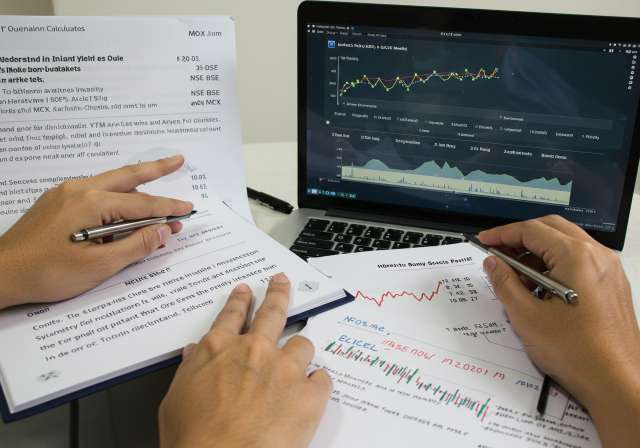
Looking for the best demat account for traders in India? Compare brokerage charges, features, platform usability & customer support. Find the perfect account fo
Looking for the best demat account for traders in india? Compare brokerage charges, features, platform usability & customer support. Find the perfect account for your trading style and maximize your profits in the Indian stock market! Open your demat account today.
Best Demat Account for Traders in India: A Comprehensive Guide
Introduction: Navigating the Indian Stock Market with the Right Demat Account
The Indian stock market, comprising the National Stock Exchange (NSE) and the Bombay Stock Exchange (BSE), offers a plethora of opportunities for traders seeking to grow their wealth. From seasoned investors to newcomers dipping their toes into equity markets, a Demat account is an indispensable tool. It acts as a digital repository for your shares and securities, simplifying trading and investment activities. But with a multitude of brokers vying for your attention, choosing the right Demat account can be a daunting task. This guide aims to provide you with a comprehensive overview of the key factors to consider when selecting the best Demat account for traders in India, helping you make an informed decision that aligns with your specific trading needs and investment goals.
Understanding Demat Accounts: A Trader’s Essential Tool
Before diving into the specifics of choosing a Demat account, let’s understand what it is and why it’s crucial for traders. A Dematerialized Account, or Demat account, holds shares and securities in electronic form. This eliminates the need for physical share certificates, making trading faster, more efficient, and significantly reducing the risk of loss or damage. The Securities and Exchange Board of India (SEBI) mandates that all transactions in the Indian stock market be conducted through a Demat account.
For traders, a Demat account is more than just a storage facility. It’s the gateway to accessing various trading instruments, including:
- Equity Shares: Direct ownership in publicly listed companies.
- Derivatives: Contracts (Futures and Options) whose value is derived from underlying assets like stocks or indices.
- Mutual Funds: Investments pooled from multiple investors to invest in a diversified portfolio of stocks, bonds, or other assets.
- Exchange Traded Funds (ETFs): Similar to mutual funds but traded on stock exchanges like individual stocks.
- Initial Public Offerings (IPOs): Opportunities to invest in companies going public for the first time.
- Sovereign Gold Bonds (SGBs): Government-issued bonds denominated in gold units.
Key Factors to Consider When Choosing a Demat Account
Selecting the right Demat account is crucial for a smooth and profitable trading experience. Here are the key factors to consider:
1. Brokerage Charges and Fees
Brokerage charges are a primary concern for most traders, especially those who engage in high-frequency trading. These charges can significantly impact your overall profitability. Different brokers offer various brokerage plans, including:
- Percentage-Based Brokerage: A percentage of the transaction value is charged as brokerage. This is a traditional model.
- Flat-Fee Brokerage: A fixed fee is charged per trade, regardless of the transaction value. This is often preferred by high-volume traders.
- Discount Brokers: These brokers offer significantly lower brokerage charges compared to traditional brokers, often with limited advisory services.
In addition to brokerage charges, be aware of other fees, such as:
- Account Opening Charges: Fees for opening a Demat account.
- Annual Maintenance Charges (AMC): Charges for maintaining the Demat account. Some brokers offer lifetime free AMC.
- Transaction Charges: Charges levied by the exchange (NSE/BSE) and depositories (NSDL/CDSL) for each transaction.
- Demat Transaction Charges: Charges for transferring shares from your Demat account.
2. Trading Platform and Usability
The trading platform is your interface with the stock market. A user-friendly and feature-rich platform can significantly enhance your trading experience. Consider the following:
- Platform Accessibility: Does the broker offer a web-based platform, a mobile app, and a desktop application?
- Charting Tools: Does the platform provide advanced charting tools and technical indicators for analysis?
- Order Types: Does the platform support various order types, such as market orders, limit orders, stop-loss orders, and bracket orders?
- Real-Time Data: Does the platform provide real-time market data and news updates?
- Alerts and Notifications: Can you set up alerts and notifications for price movements and other market events?
- Ease of Use: Is the platform intuitive and easy to navigate? A cluttered and confusing platform can lead to errors and missed opportunities.
3. Research and Advisory Services
While not essential for all traders, research and advisory services can be valuable, especially for those who are new to the market or who lack the time to conduct their own research. Consider the following:
- Research Reports: Does the broker provide research reports on companies, sectors, and the overall market?
- Trading Recommendations: Does the broker offer trading recommendations based on fundamental or technical analysis?
- Investment Advisory: Does the broker provide personalized investment advice based on your risk profile and financial goals?
However, remember that relying solely on broker recommendations can be risky. Always conduct your own due diligence before making any investment decisions.
4. Customer Support
Reliable and responsive customer support is crucial for resolving issues and getting assistance when needed. Look for brokers who offer multiple channels of support, such as:
- Phone Support: Direct phone support for urgent queries.
- Email Support: Email support for less urgent issues.
- Live Chat: Instant messaging support for quick resolution.
- Knowledge Base: A comprehensive online knowledge base with FAQs and tutorials.
Test the broker’s customer support before opening an account to assess their responsiveness and helpfulness.
5. Security and Reliability
The security of your funds and securities is paramount. Choose a broker that is regulated by SEBI and has a good track record of security and reliability. Look for features such as:
- Two-Factor Authentication: An extra layer of security to protect your account from unauthorized access.
- Data Encryption: Encryption of sensitive data to prevent hacking and data breaches.
- Regular Audits: Regular security audits to identify and address vulnerabilities.
It’s also essential to understand the broker’s policies regarding data privacy and security.
6. Account Features and Additional Services
Some brokers offer additional features and services that can enhance your trading experience, such as:
- Margin Trading: The ability to borrow funds from the broker to increase your trading power. Use margin trading cautiously as it can amplify both profits and losses.
- Automated Trading: The ability to automate your trading strategies using algorithms and bots.
- Portfolio Management Services (PMS): Professional management of your investment portfolio.
- IPO Application: A seamless process for applying for IPOs.
- Integration with Other Financial Tools: Integration with other financial tools, such as tax filing software.
Consider these features based on your individual trading style and requirements.
Popular Demat Account Providers in India
Several reputable brokers in India offer Demat accounts. Here are a few popular options:
- Zerodha: Known for its discount brokerage model and user-friendly platform, Kite.
- Upstox: Another popular discount broker offering competitive brokerage rates and a modern trading platform.
- Angel One: A full-service broker with a strong research and advisory team.
- ICICI Direct: A popular choice for investors who prefer a bank-backed brokerage account.
- HDFC Securities: Another bank-backed broker offering a wide range of financial products and services.
- Groww: Known for its simplified and intuitive user interface, especially for beginners.
It is recommended to research and compare the offerings of different brokers before making a decision.
Demat Account and Investment Options beyond Trading
While this article focuses on trading, it’s important to remember that Demat accounts facilitate long-term investing as well. You can use your Demat account to invest in various instruments for long-term wealth creation, including:
- Mutual Funds through SIPs (Systematic Investment Plans): Regularly invest a fixed amount in a mutual fund to benefit from rupee cost averaging.
- Equity Linked Savings Schemes (ELSS): Invest in ELSS funds to save on taxes under Section 80C of the Income Tax Act.
- Public Provident Fund (PPF): A long-term, tax-advantaged savings scheme offered by the government. While not directly linked to a Demat account, the returns can be used for reinvestment through your Demat.
- National Pension System (NPS): A retirement savings scheme with tax benefits. Again, the matured amount can be channeled back into the markets using your Demat account.
Opening a Demat Account: A Step-by-Step Guide
Opening a Demat account is a straightforward process. You can typically open an account online or offline.
Online Process:
- Visit the broker’s website.
- Fill out the online application form.
- Upload the required documents (PAN card, Aadhaar card, bank statement, etc.).
- Complete the e-KYC (Know Your Customer) process, which typically involves a video call or in-person verification.
- Your account will be activated after verification.
Offline Process:
- Visit the broker’s branch.
- Fill out the physical application form.
- Submit the required documents.
- Complete the KYC process.
- Your account will be activated after verification.
Conclusion: Making the Right Choice for Your Trading Journey
Choosing the right Demat account is a critical step towards successful trading in the Indian stock market. Carefully consider your trading style, frequency of trades, research needs, and budget when evaluating different brokers. By taking the time to research and compare your options, you can find the best demat account for traders in india that meets your specific requirements and empowers you to achieve your financial goals. Remember to prioritize security, usability, and customer support to ensure a smooth and profitable trading experience. Don’t hesitate to start with a small amount and gradually increase your investments as you gain experience and confidence.