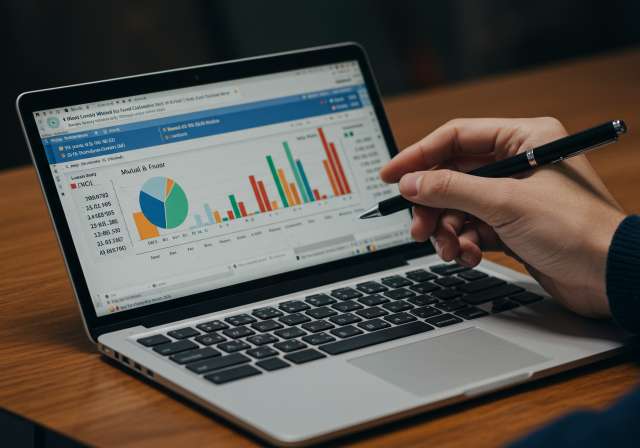
Want to try daily trading? Unlock the power of intra-day trades with a demat account for daily trading. Learn features, benefits, charges & how to choose the ri
Want to try daily trading? Unlock the power of intra-day trades with a demat account for daily trading. Learn features, benefits, charges & how to choose the right one!
Demat Account for Daily Trading: A Comprehensive Guide for Indian Traders
Introduction: The Gateway to Intra-day Trading in India
The Indian stock market, with its dynamic fluctuations and potential for quick gains, attracts many investors keen on daily trading. Daily trading, also known as intra-day trading, involves buying and selling stocks within the same trading day. Successfully navigating this fast-paced environment requires the right tools, and at the core of it all is a SEBI-regulated demat account.
Before diving in, understand that daily trading is inherently risky. While the potential for profit is there, the possibility of significant losses also exists. Thorough research, a disciplined approach, and a strong understanding of market dynamics are crucial for success. This guide aims to provide a comprehensive overview of demat accounts and their role in daily trading within the Indian context.
What is a Demat Account?
A dematerialized account, or demat account, is an electronic repository for holding shares and other securities in a dematerialized (electronic) format. Before demat accounts, physical share certificates were the norm, which were cumbersome to handle and prone to damage or loss. Demat accounts, introduced by the National Stock Exchange (NSE) and Bombay Stock Exchange (BSE), revolutionized the Indian stock market by providing a safe, efficient, and convenient way to manage investments.
Think of it as a bank account for your shares. Just as you deposit money into a bank account, you deposit your shares into a demat account. Transactions, such as buying and selling shares, are electronically recorded in your account, providing a transparent and readily accessible record of your holdings.
Why is a Demat Account Essential for Daily Trading?
A demat account is not just recommended; it’s mandatory for trading in the Indian equity markets. Here’s why it’s indispensable for daily trading:
- Mandatory for Trading: As mandated by SEBI, you need a demat account to buy or sell shares listed on the NSE and BSE.
- Faster Transactions: Demat accounts enable quick and seamless transactions, crucial for capitalizing on intra-day price movements.
- Convenience and Accessibility: Manage your holdings from anywhere with internet access, facilitating timely trading decisions.
- Reduced Risk: Eliminates the risks associated with handling physical share certificates, such as loss, theft, or damage.
- Ease of Tracking: Provides a consolidated view of your investments, making it easier to monitor performance and manage your portfolio.
Choosing the Right Demat Account for Daily Trading
Not all demat accounts are created equal. Selecting the right account is crucial for a successful daily trading experience. Here are key factors to consider:
1. Brokerage Charges:
Brokerage charges are the fees you pay to your broker for executing trades. Daily traders typically execute a high volume of trades, so even small brokerage charges can add up significantly. Look for brokers offering competitive brokerage plans, such as:
- Discount Brokers: Offer significantly lower brokerage rates (often a flat fee per trade) compared to traditional brokers. They typically provide online trading platforms and limited advisory services.
- Full-Service Brokers: Offer a wider range of services, including research reports, investment advice, and personalized support. Their brokerage charges are generally higher.
Carefully evaluate your trading style and needs to determine the most cost-effective brokerage plan. Consider the impact of brokerage on your overall profitability. For example, if you plan to trade frequently with small profit margins, a discount broker with a flat fee might be the best option.
2. Trading Platform:
The trading platform is your interface with the stock market. A user-friendly, reliable, and feature-rich platform is essential for efficient daily trading. Look for the following features:
- Real-time Data: Access to live market data, including price quotes, charts, and order books.
- Advanced Charting Tools: Technical analysis tools for identifying trading opportunities.
- Order Placement Options: Various order types, such as market orders, limit orders, stop-loss orders, and bracket orders.
- Customization: The ability to customize the platform to your preferences, such as creating watchlists and setting alerts.
- Mobile App: A mobile app for trading on the go.
Most brokers offer demo accounts that allow you to test their trading platforms before opening a live account. Take advantage of these demo accounts to evaluate different platforms and choose the one that best suits your needs.
3. Margin Availability:
Margin trading allows you to trade with borrowed funds, magnifying your potential profits (and losses). Daily traders often rely on margin to increase their trading capital. Consider the margin offered by the broker and the associated interest rates. Remember, using margin significantly increases the risk of loss. Exercise caution and only trade with margin if you fully understand the risks involved.
4. Account Opening and Maintenance Charges:
Brokers may charge fees for opening a demat account and for maintaining the account annually. Compare these charges across different brokers. Some brokers offer zero account opening fees or annual maintenance charges (AMC) as a promotional offer. Read the fine print to understand all applicable fees.
5. Customer Support:
Responsive and helpful customer support is essential, especially for daily traders who need quick assistance. Choose a broker with reliable customer support channels, such as phone, email, and live chat. Check online reviews to get an idea of the broker’s customer service reputation.
6. Depository Participant (DP):
Your demat account is held with a Depository Participant (DP), which is an agent of a depository like CDSL (Central Depository Services Limited) or NSDL (National Securities Depository Limited). While you interact with the broker, the DP actually holds your securities. Ensure the broker is a registered DP with either CDSL or NSDL.
Opening a Demat Account: A Step-by-Step Guide
Opening a demat account is a relatively straightforward process. You can typically open an account online or offline.
Online Account Opening:
- Choose a Broker: Research and select a SEBI-registered broker that meets your needs.
- Visit the Broker’s Website: Go to the broker’s website and find the “Open Demat Account” section.
- Fill out the Online Application Form: Provide your personal information, KYC details (PAN card, Aadhaar card, address proof), and bank account details.
- E-KYC Verification: Complete the e-KYC (Know Your Customer) process, which involves verifying your identity and address online. This typically involves uploading scanned copies of your documents and undergoing a video verification.
- In-Person Verification (IPV): Some brokers may require an In-Person Verification (IPV) via video call.
- Account Activation: Once your application is approved, your demat account will be activated, and you will receive your account details.
Offline Account Opening:
- Visit a Broker’s Branch: Visit a branch of your chosen broker.
- Fill out the Application Form: Obtain and fill out the demat account opening form.
- Submit Documents: Submit the required KYC documents (PAN card, Aadhaar card, address proof), along with the application form.
- IPV: Complete the In-Person Verification (IPV) process.
- Account Activation: Once your application is approved, your demat account will be activated.
Understanding Demat Account Charges
Besides brokerage charges, there are other fees associated with demat accounts. Understanding these charges is crucial for managing your trading expenses.
- Account Opening Charges: A one-time fee for opening the account.
- Annual Maintenance Charges (AMC): A recurring fee charged annually for maintaining the account.
- Transaction Charges: Charges levied on each buy or sell transaction.
- Dematerialization Charges: Charges for converting physical share certificates into electronic form.
- Rematerialization Charges: Charges for converting electronic shares back into physical form.
- Pledge Creation/Closure Charges: Charges for creating or closing a pledge on your shares (used for taking loans against your holdings).
Demat Account and Other Investment Options
While a demat account is essential for equity trading, it can also be used to hold other investment options, such as:
- Mutual Funds: Units of mutual fund schemes can be held in your demat account.
- Exchange Traded Funds (ETFs): ETFs, which are similar to mutual funds but traded on stock exchanges, can also be held in a demat account.
- Bonds: Government and corporate bonds can be held in demat form.
- Initial Public Offerings (IPOs): Applying for IPOs is easier with a demat account.
- Sovereign Gold Bonds (SGBs): SGBs, issued by the RBI, can be held in demat form.
Tax Implications of Daily Trading
Profits from daily trading are considered speculative income and are taxed accordingly. It’s crucial to understand the tax implications of your trading activities and comply with Indian tax laws. Consult with a tax advisor for personalized guidance.
Generally, profits from intra-day trading are taxed as business income, and you can claim expenses related to your trading activities as deductions. However, the specific tax treatment can vary depending on your individual circumstances.
Risks Associated with Daily Trading
Daily trading is a high-risk, high-reward activity. It’s essential to be aware of the risks involved before engaging in daily trading.
- High Volatility: Stock prices can fluctuate rapidly during the day, leading to potential losses.
- Leverage Risk: Using margin can magnify both profits and losses.
- Emotional Trading: Making impulsive decisions based on fear or greed can lead to poor trading outcomes.
- Lack of Knowledge: Trading without sufficient knowledge and understanding of market dynamics can be disastrous.
- Time Commitment: Daily trading requires significant time and attention.
Tips for Successful Daily Trading
While there’s no guaranteed formula for success, here are some tips to improve your chances of profitability in daily trading:
- Educate Yourself: Learn about technical analysis, fundamental analysis, and market dynamics.
- Develop a Trading Plan: Define your trading goals, risk tolerance, and trading strategies.
- Manage Your Risk: Use stop-loss orders to limit potential losses.
- Control Your Emotions: Avoid making impulsive decisions.
- Start Small: Begin with a small amount of capital and gradually increase your trading size as you gain experience.
- Stay Disciplined: Stick to your trading plan and avoid deviating from your strategy.
- Keep Learning: The market is constantly evolving, so continuous learning is essential.
The Role of SIPs, ELSS, PPF, and NPS
While this article focuses on the use of a demat account for daily trading, it’s important to remember that daily trading is not the only investment option available. Consider diversifying your portfolio with other investment instruments, such as:
- Systematic Investment Plans (SIPs): Invest regularly in mutual funds through SIPs for long-term wealth creation.
- Equity Linked Savings Schemes (ELSS): Invest in ELSS funds to save on taxes and grow your wealth.
- Public Provident Fund (PPF): A government-backed savings scheme offering tax benefits and attractive returns.
- National Pension System (NPS): A retirement savings scheme offering tax benefits and long-term growth potential.
Conclusion: Demat Account – Your Key to Daily Trading, but Proceed with Caution
A demat account is an indispensable tool for anyone looking to participate in daily trading in the Indian stock market. However, it’s crucial to approach daily trading with caution, discipline, and a strong understanding of the risks involved. Remember that successful daily trading requires a combination of knowledge, skill, and risk management. Before you begin your daily trading journey, ensure you’ve thoroughly researched the market, understood the fundamentals, and developed a robust trading plan. Diversify your investments and consider long-term investment options like SIPs, ELSS, PPF, and NPS for a well-rounded financial strategy.