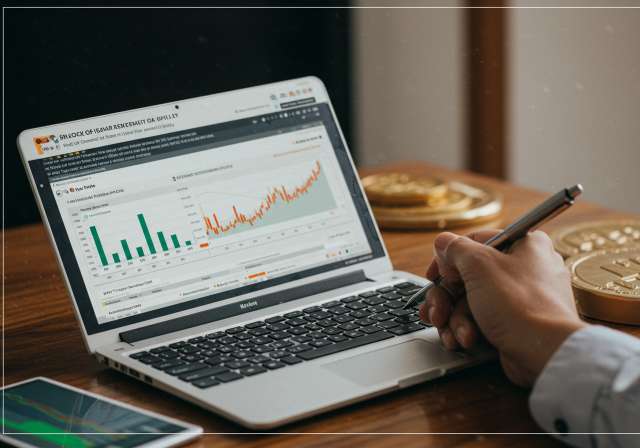
Unlock the world of investing! Compare brokers, understand charges, and learn how to choose the best Demat account for your trading needs. Start your investment
Unlock the world of investing! Compare brokers, understand charges, and learn how to choose the best Demat account for your trading needs. Start your investment journey today!
Demystifying Demat Accounts: Costs, Benefits, and Smart Choices
Understanding Demat Accounts: Your Gateway to the Indian Stock Market
In today’s digital age, a Demat account is as essential as a bank account for anyone looking to participate in the Indian equity markets. Short for Dematerialization Account, it holds your shares and securities in electronic form. This eliminates the need for physical share certificates, making trading and investing more efficient and secure. Think of it as a digital locker for your investments, providing easy access and management of your portfolio.
Before the introduction of Demat accounts, transferring shares involved cumbersome paperwork and long processing times. The physical certificates were also prone to damage, loss, and forgery. The introduction of Demat accounts by the National Securities Depository Limited (NSDL) and Central Depository Services Limited (CDSL) – the two depositories in India – revolutionized the Indian stock market, making it accessible to a wider audience.
Key Benefits of Opening a Demat Account
- Convenience: Manage your investments from anywhere with internet access.
- Security: Eliminates the risk of loss, theft, or damage associated with physical certificates.
- Efficiency: Faster transfer and settlement of securities.
- Accessibility: Allows you to invest in various financial instruments like equities, mutual funds, and bonds.
- Flexibility: Easily update your information, such as address and nominee details, electronically.
Unveiling the Costs Associated with Demat Accounts
While the idea of a “free demat” account is appealing, it’s crucial to understand the various charges involved. Demat accounts, like any financial service, come with associated costs that can significantly impact your returns if not carefully considered. Here’s a breakdown of the common charges:
- Account Opening Charges: This is a one-time fee charged when you open your Demat account. Some brokers offer waivers on this charge as a promotional offer.
- Annual Maintenance Charges (AMC): This is a recurring fee charged annually to maintain your Demat account. AMC varies among different brokers and can range from ₹0 to ₹1,000 or more. Some brokers offer lifetime free AMC under specific conditions.
- Transaction Charges: These are charged for each buy or sell transaction you execute through your Demat account. They can be charged as a percentage of the transaction value or as a fixed fee per transaction. It is important to compare the transaction charges across different brokers.
- Custodian Fees: These are charged by the depository participants (DPs) – your broker – for keeping your securities safe in electronic form.
- Other Charges: Additional charges may include dematerialization charges (converting physical certificates to electronic form), rematerialization charges (converting electronic securities back to physical form), and charges for failed transactions.
Comparing Demat Account Providers: Finding the Best Fit for You
Choosing the right Demat account provider is a crucial decision that can significantly impact your investment experience. With numerous brokers operating in the Indian market, each offering different features, charges, and services, it’s essential to conduct thorough research and compare your options before making a choice.
Key Factors to Consider When Choosing a Demat Account Provider
- Brokerage Charges: Compare the brokerage rates charged for equity, derivatives, and other segments. Look for brokers with transparent pricing and no hidden fees.
- Account Maintenance Charges: Evaluate the AMC charged by different brokers and see if they offer any waivers or discounts.
- Trading Platform: Choose a broker with a user-friendly and reliable trading platform that offers advanced charting tools, real-time market data, and seamless order execution. Check for mobile app availability and functionality for trading on the go.
- Research and Advisory Services: Some brokers provide research reports, investment recommendations, and advisory services to help you make informed decisions. Assess the quality and relevance of these services.
- Customer Support: Look for a broker with responsive and helpful customer support channels, including phone, email, and live chat. Check their response time and resolution rate.
- Reputation and Reliability: Choose a broker with a good reputation and a strong track record. Check online reviews and ratings to gauge their reliability and customer satisfaction.
- Additional Features: Some brokers offer additional features such as margin funding, IPO applications, and access to international markets. Consider these features based on your investment needs.
Navigating the Process of Opening a Demat Account
Opening a Demat account is a relatively straightforward process that can be completed online or offline. Here’s a step-by-step guide:
- Choose a Depository Participant (DP): Select a broker that is registered with either NSDL or CDSL.
- Fill out the Account Opening Form: Obtain the Demat account opening form from the broker’s website or branch. Fill out the form accurately and provide all the required information.
- Submit KYC Documents: Submit your Know Your Customer (KYC) documents, including proof of identity (PAN card, Aadhaar card, passport) and proof of address (Aadhaar card, utility bill, bank statement).
- In-Person Verification (IPV): Some brokers may require you to undergo an In-Person Verification (IPV) process to verify your identity. This can be done online via video conferencing or in person at the broker’s branch.
- Agreement and Terms and Conditions: Carefully read the agreement and terms and conditions provided by the broker before signing.
- Account Activation: Once your documents are verified and your application is approved, your Demat account will be activated. You will receive your account details, including your DP ID and client ID.
Investing in Mutual Funds Through Your Demat Account
Your Demat account is not just for trading stocks; it also opens doors to investing in mutual funds. You can purchase and hold mutual fund units in dematerialized form, making it easier to manage your entire investment portfolio in one place. Here’s how:
- Choose a Mutual Fund Scheme: Research and select a mutual fund scheme that aligns with your investment goals and risk tolerance. Consider factors such as the fund’s past performance, expense ratio, and investment strategy.
- Purchase Mutual Fund Units: You can purchase mutual fund units through your broker’s trading platform or directly from the Asset Management Company (AMC).
- Units Credited to Demat Account: Once your purchase is processed, the mutual fund units will be credited to your Demat account.
- Monitor Your Investments: You can track the performance of your mutual fund investments through your Demat account statement.
Systematic Investment Plans (SIPs) are a popular way to invest in mutual funds. With a SIP, you invest a fixed amount regularly, typically monthly, in a mutual fund scheme. This helps you to average out your investment cost and benefit from the power of compounding.
Demat Accounts and IPOs: Participating in the Primary Market
A Demat account is essential for applying for Initial Public Offerings (IPOs). IPOs are the first time a private company offers its shares to the public. Applying for an IPO requires you to have a Demat account where the allotted shares will be credited.
Applying for IPOs Through Your Demat Account
- Check for Upcoming IPOs: Stay updated on upcoming IPOs through financial news websites and your broker’s platform.
- Apply Online: Apply for the IPO through your broker’s online platform or through the ASBA (Application Supported by Blocked Amount) facility offered by your bank.
- Enter Demat Account Details: When applying for an IPO, you will need to provide your Demat account details, including your DP ID and client ID.
- Bid for Shares: You can bid for the shares you want to purchase in the IPO.
- Allotment: If your application is successful, the shares will be allotted to your Demat account.
Tax Implications of Demat Account Transactions
It’s crucial to understand the tax implications of transactions carried out through your Demat account. Capital gains tax is levied on the profits you make from selling shares and other securities held in your Demat account.
- Short-Term Capital Gains (STCG): If you sell shares held for less than 12 months, the profits are considered short-term capital gains and are taxed at a rate of 15% (plus applicable surcharge and cess).
- Long-Term Capital Gains (LTCG): If you sell shares held for more than 12 months, the profits are considered long-term capital gains. LTCG up to ₹1 lakh in a financial year is exempt from tax. LTCG exceeding ₹1 lakh is taxed at a rate of 10% (plus applicable surcharge and cess).
Equity Linked Savings Schemes (ELSS) are a type of mutual fund that invests primarily in equities and offers tax benefits under Section 80C of the Income Tax Act. Investments in ELSS qualify for a deduction of up to ₹1.5 lakh per financial year, reducing your taxable income.
Beyond Equities: Exploring Other Investment Avenues Through Your Demat Account
While Demat accounts are primarily used for trading in equities, they also provide access to other investment avenues, including:
- Sovereign Gold Bonds (SGBs): SGBs are government securities denominated in grams of gold. They are issued by the Reserve Bank of India (RBI) and offer a safe and convenient way to invest in gold.
- Exchange Traded Funds (ETFs): ETFs are funds that track a specific index or commodity. They are traded on stock exchanges like regular stocks and offer a cost-effective way to diversify your portfolio.
- Corporate Bonds: Corporate bonds are debt securities issued by companies to raise capital. Investing in corporate bonds can provide a fixed income stream.
- Government Securities (G-Secs): G-Secs are debt securities issued by the government. They are considered to be risk-free investments.
Final Thoughts: Empowering Your Investment Journey
Opening a Demat account is a crucial step towards participating in the Indian stock market and achieving your financial goals. By understanding the costs, benefits, and processes involved, you can make informed decisions and choose the Demat account provider that best suits your needs. Remember to carefully compare brokerage charges, account maintenance fees, and trading platform features before making a decision. Don’t get swayed by the idea of a completely free demat account without understanding the fine print. With careful planning and a disciplined approach, you can leverage the power of your Demat account to build a diversified investment portfolio and secure your financial future. Always remember to consult with a financial advisor before making any investment decisions.