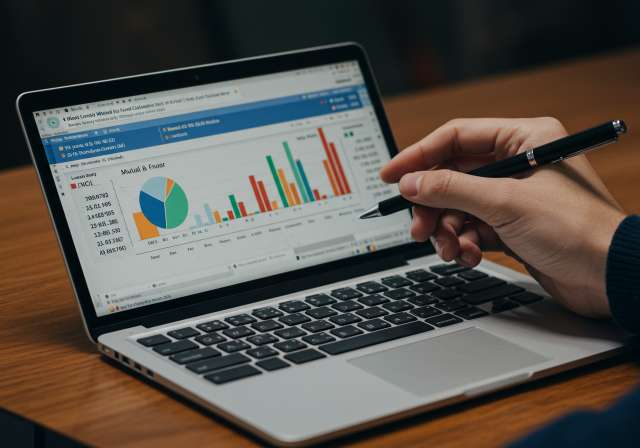
Unlock daily trading success with a Demat account! Learn setup, benefits & strategies for navigating NSE/BSE. Optimize your investments today! DematAccountForDa
Unlock daily trading success with a Demat account! Learn setup, benefits & strategies for navigating NSE/BSE. Optimize your investments today! DematAccountForDailyTrading
demat account for daily trading: Your Gateway to Market Opportunities
Understanding the Basics: What is a Demat Account?
Before diving into the world of daily trading, let’s establish a clear understanding of what a Demat account is. Demat, short for Dematerialization, refers to the process of converting physical share certificates into electronic form. A Demat account, therefore, is an account that holds these electronic shares and other securities, similar to how a bank account holds your money.
In India, Demat accounts are essential for participating in the equity markets through exchanges like the NSE (National Stock Exchange) and BSE (Bombay Stock Exchange). SEBI (Securities and Exchange Board of India) regulates these accounts and ensures investor protection. Without a Demat account, you cannot buy or sell shares in the Indian stock market.
Key Components of a Demat Account:
- Account Holder: The individual or entity that owns the securities held in the account.
- Depository Participant (DP): An intermediary registered with SEBI that provides Demat account services. Examples include banks, brokerage firms, and financial institutions.
- Depository: An organization that holds the electronic securities. In India, the two main depositories are NSDL (National Securities Depository Limited) and CDSL (Central Depository Services Limited).
Why is a Demat Account Necessary for Daily Trading?
Daily trading, also known as intraday trading, involves buying and selling securities within the same trading day. The goal is to profit from small price fluctuations in the market. A Demat account is indispensable for this activity for several reasons:
- Seamless Transactions: Demat accounts facilitate quick and efficient transfer of securities. This is crucial for daily traders who need to execute numerous trades throughout the day.
- Reduced Risk: Holding shares in electronic form eliminates the risk of loss, theft, or damage associated with physical certificates.
- Convenience: Managing your portfolio becomes significantly easier with a Demat account. You can track your holdings, view transaction history, and access research reports online.
- Faster Settlement: The settlement cycle for trades executed through a Demat account is much faster compared to physical shares, typically T+1 (Trade date plus one day), enabling quicker access to your funds.
- Mandatory Requirement: As mandated by SEBI, a Demat account is a prerequisite for trading in the Indian stock market.
Setting Up Your Demat Account for Daily Trading: A Step-by-Step Guide
Opening a Demat account is a relatively straightforward process. Here’s a step-by-step guide to help you get started:
- Choose a Depository Participant (DP): Research and select a reputable DP that offers competitive brokerage rates, efficient services, and a user-friendly trading platform. Consider factors like brokerage fees, account maintenance charges, customer support, and the availability of research tools. Popular DPs in India include Zerodha, Angel One, ICICI Direct, and HDFC Securities.
- Fill Out the Application Form: Obtain the Demat account opening form from your chosen DP’s website or branch. Fill out the form accurately and provide all the required information.
- Submit KYC Documents: You will need to submit Know Your Customer (KYC) documents, including proof of identity (e.g., PAN card, Aadhaar card, passport) and proof of address (e.g., Aadhaar card, utility bill, bank statement).
- In-Person Verification (IPV): Many DPs conduct an IPV, either physically or virtually, to verify your identity and documents.
- Agreement and Charges: Carefully read the terms and conditions of the Demat account agreement before signing. Understand the applicable charges, such as account opening fees, annual maintenance charges (AMC), and transaction fees.
- Account Activation: Once your application is processed and verified, your Demat account will be activated. You will receive your account details, including your DP ID and client ID.
Essential Features and Considerations for Daily Trading
While a Demat account is fundamental, maximizing its utility for daily trading requires careful consideration of certain features and factors:
Choosing the Right Brokerage Plan
Brokerage fees can significantly impact your profitability as a daily trader. Consider the following brokerage models:
- Percentage-Based Brokerage: A percentage of the transaction value is charged as brokerage. This is a traditional model and might be expensive for high-volume traders.
- Flat Fee Brokerage: A fixed fee is charged per trade, regardless of the transaction value. This model is often more cost-effective for frequent traders.
- Discount Brokers: These brokers offer very low brokerage fees, often charging a flat fee per trade or even zero brokerage on delivery trades. However, they may provide limited research and advisory services.
Trading Platform and Tools
A reliable and user-friendly trading platform is essential for daily trading. Look for platforms that offer the following features:
- Real-time Market Data: Access to live stock prices, charts, and news is crucial for making informed trading decisions.
- Advanced Charting Tools: Charting tools help you analyze price patterns, identify trends, and predict future price movements.
- Order Placement Options: The platform should offer various order types, such as market orders, limit orders, stop-loss orders, and bracket orders, to manage your risk effectively.
- Alerts and Notifications: Set up alerts to be notified of specific price movements or events.
Margin Trading Facility
Margin trading allows you to trade with borrowed funds, increasing your potential profits (and losses). However, it also amplifies your risk. Understanding the margin requirements and risks associated with margin trading is crucial.
Risk Management Strategies
Daily trading is inherently risky. Implementing robust risk management strategies is essential to protect your capital. Key strategies include:
- Setting Stop-Loss Orders: Stop-loss orders automatically close your position if the price moves against you, limiting your potential losses.
- Position Sizing: Determine the appropriate amount of capital to allocate to each trade based on your risk tolerance and account size.
- Diversification: While daily traders often focus on a few stocks, diversifying your portfolio to some extent can help reduce overall risk.
Tax Implications of Daily Trading
Profits from daily trading are generally considered speculative business income and are taxed according to your income tax slab. It is essential to maintain accurate records of your trades and consult a tax advisor to understand the tax implications and reporting requirements.
Beyond Daily Trading: Exploring Investment Options with Your Demat Account
Your Demat account isn’t just for daily trading. It opens doors to a wide range of investment opportunities, including:
Long-Term Equity Investments
Investing in fundamentally strong companies for the long term can generate significant returns. Your Demat account allows you to buy and hold shares of companies listed on the NSE and BSE.
Mutual Funds
Mutual funds pool money from multiple investors to invest in a diversified portfolio of stocks, bonds, or other assets. You can invest in mutual funds through your Demat account, choosing from a variety of schemes based on your risk appetite and investment goals. Options include Equity Linked Savings Schemes (ELSS) for tax saving under Section 80C of the Income Tax Act, alongside other diversified equity, debt, and hybrid funds.
Initial Public Offerings (IPOs)
An IPO is when a private company offers shares to the public for the first time. Your Demat account is required to apply for IPOs and receive the allotted shares.
Sovereign Gold Bonds (SGBs)
SGBs are government-backed bonds denominated in gold. They offer a safe and convenient way to invest in gold without the need for physical storage. These can be held in Demat form.
Other Securities
Your Demat account can also hold other securities, such as government bonds, corporate bonds, and exchange-traded funds (ETFs).
Alternative Investment Avenues: PPF and NPS
While a Demat account is crucial for participating directly in the equity markets, it’s worth considering other investment avenues for long-term financial planning. Two popular options in India are the Public Provident Fund (PPF) and the National Pension System (NPS).
Public Provident Fund (PPF)
PPF is a long-term savings scheme offered by the government. It offers tax benefits under Section 80C of the Income Tax Act and provides a guaranteed return. The interest earned on PPF is also tax-free.
National Pension System (NPS)
NPS is a retirement savings scheme designed to provide income after retirement. It offers a mix of equity and debt investments and allows you to choose your asset allocation based on your risk profile. NPS also offers tax benefits under Section 80CCD.
Conclusion
A Demat account is an indispensable tool for anyone looking to participate in the Indian stock market, especially for daily trading. Understanding the basics of Demat accounts, choosing the right DP, and implementing robust risk management strategies are crucial for success. While daily trading can be rewarding, it’s important to approach it with caution and discipline. Remember to explore other investment options, such as mutual funds, PPF, and NPS, to build a well-diversified portfolio and achieve your financial goals.