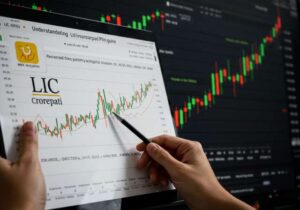
Unlock the secrets of intraday trading! Learn strategies, risks, and tips for navigating the Indian stock market. Discover if intraday trading is right for you.
intraday trading: A Beginner’s Guide to Day Trading in India
What is Intraday Trading?
The Indian stock market, comprising exchanges like the National Stock Exchange (NSE) and the Bombay Stock Exchange (BSE), offers various avenues for investors to grow their wealth. One of the more dynamic, and arguably riskier, options is intraday trading, often called day trading. But what exactly is it, and how does it work?
In essence, intraday trading involves buying and selling stocks within the same trading day. The goal is to profit from small price fluctuations that occur throughout the day. Unlike long-term investing where you hold stocks for months or years, an intraday trader doesn’t carry any positions overnight. All trades are squared off before the market closes.
Think of it this way: a long-term investor is planting a tree, nurturing it over years for a bountiful harvest. An intraday trader is more like a quick-fire artist, spotting a fleeting opportunity, capitalizing on it, and moving on to the next canvas before the day ends.
Understanding the Mechanics
To effectively engage in intraday trading, you need to grasp the fundamentals of how it operates. Here’s a breakdown:
- Market Hours: Trading typically occurs during regular market hours, which in India, are generally from 9:15 AM to 3:30 PM IST. This timeframe provides the playground for intraday traders.
- Leverage: Brokers often offer leverage, which allows traders to control a larger position with a smaller amount of capital. While leverage can amplify profits, it also significantly magnifies losses. It’s crucial to understand and manage leverage responsibly. SEBI, the regulatory body for securities markets in India, constantly monitors and adjusts leverage rules to protect investors.
- Technical Analysis: Intraday traders rely heavily on technical analysis to identify potential trading opportunities. This involves studying charts, patterns, and indicators to predict short-term price movements.
- Risk Management: Implementing robust risk management strategies, such as setting stop-loss orders, is paramount. A stop-loss order automatically sells a stock when it reaches a predetermined price, limiting potential losses.
Key Strategies for Intraday Trading
While luck might play a small role, successful intraday trading relies heavily on well-defined strategies and disciplined execution. Here are some popular strategies:
- Trend Following: Identifying and riding existing market trends. If a stock is showing a strong upward trend, a trader might buy with the expectation that the trend will continue.
- Breakout Trading: Capitalizing on situations where a stock’s price breaks through a significant resistance level (a price point where the stock has previously struggled to surpass).
- Reversal Trading: Attempting to profit from anticipated price reversals. This strategy is riskier as it involves predicting when a trend will change direction.
- Scalping: Making numerous small profits by exploiting tiny price gaps. Scalpers often hold positions for only a few seconds or minutes.
Remember, no strategy guarantees profits. Continuous learning and adaptation are essential for success in the ever-changing stock market.
Tools and Resources for Intraday Traders
Equipping yourself with the right tools and resources is crucial for making informed decisions. Here are some essential tools:
- Trading Platform: A reliable trading platform with real-time market data, charting tools, and order execution capabilities is essential. Many brokers in India offer user-friendly platforms for both desktop and mobile devices.
- Charting Software: Advanced charting software allows you to analyze price patterns, identify trends, and apply technical indicators.
- News and Market Data: Staying informed about market news, economic data releases, and company announcements is critical. Several websites and financial news channels provide real-time updates.
- Brokerage Research Reports: Many brokerage firms provide research reports and recommendations that can offer valuable insights into potential trading opportunities.
The Risks Involved
Before diving into intraday trading, it’s vital to acknowledge the inherent risks:
- High Volatility: The stock market can be highly volatile, and sudden price swings can lead to significant losses.
- Leverage Risk: While leverage can amplify profits, it can also magnify losses exponentially.
- Emotional Decision-Making: Fear and greed can cloud judgment and lead to impulsive decisions.
- Time Commitment: Intraday trading requires a significant time commitment and the ability to monitor the market closely throughout the day.
- Capital Loss: It’s possible to lose a significant portion, or even all, of your invested capital.
It’s important to understand that intraday trading is not a guaranteed path to riches. It requires discipline, knowledge, and a well-defined risk management plan.
Is Intraday Trading Right for You?
Intraday trading isn’t for everyone. It’s crucial to assess your personality, risk tolerance, and financial situation before deciding to engage in it. Consider the following questions:
- Are you comfortable with taking risks? If you are risk-averse, intraday trading might not be a suitable option.
- Do you have the time and dedication to commit to monitoring the market throughout the day? Intraday trading requires constant attention and quick decision-making.
- Do you have a solid understanding of technical analysis and market dynamics? A strong foundation in these areas is essential for success.
- Can you manage your emotions effectively and avoid impulsive decisions? Emotional control is crucial for making rational trading decisions.
- Do you have sufficient capital to withstand potential losses? Only trade with capital that you can afford to lose without impacting your financial stability.
If you answered “no” to several of these questions, you might want to consider other investment options, such as long-term investing in equity markets through mutual funds, Systematic Investment Plans (SIPs), Equity Linked Savings Schemes (ELSS) for tax benefits, Public Provident Fund (PPF), or the National Pension System (NPS) for retirement planning. These offer a more diversified and less stressful approach to wealth creation.
Tips for Aspiring Intraday Traders
If you’ve carefully considered the risks and believe that intraday trading is right for you, here are some tips to help you get started:
- Start with Paper Trading: Practice your strategies using a virtual trading account before risking real money. Many brokers offer paper trading accounts that simulate real market conditions.
- Develop a Trading Plan: Create a detailed trading plan that outlines your goals, strategies, risk management rules, and entry/exit criteria.
- Set Realistic Goals: Don’t expect to get rich overnight. Set achievable goals and focus on consistent, incremental gains.
- Manage Your Risk: Use stop-loss orders to limit potential losses and avoid risking more than you can afford to lose on any single trade.
- Stay Disciplined: Stick to your trading plan and avoid making impulsive decisions based on emotions.
- Continuously Learn: The stock market is constantly evolving. Stay updated on market trends, new trading strategies, and regulatory changes.
- Control Your Emotions: Fear and greed are your biggest enemies. Learn to manage your emotions and make rational decisions.
- Keep a Trading Journal: Record all your trades, including the reasons for your decisions, entry and exit prices, and the outcome of each trade. Review your journal regularly to identify areas for improvement.
The Importance of a Demat Account
Before you can start intraday trading (or any kind of stock market investing) in India, you’ll need a Demat account (Dematerialization account) and a trading account. These accounts are essential for holding and trading securities electronically. Your Demat account holds the shares you buy in electronic form, while your trading account is used to place buy and sell orders. Several brokers offer integrated Demat and trading accounts, making the process more convenient.
Taxation of Intraday Trading Profits
Profits from intraday trading are generally considered speculative business income and are taxed according to your income tax slab. It’s essential to maintain accurate records of your trading activities and consult with a tax advisor to understand your tax obligations.
Conclusion
Intraday trading can be a potentially rewarding but also highly risky endeavor. It requires a significant time commitment, a solid understanding of market dynamics, a disciplined approach, and a well-defined risk management plan. Before you embark on this journey, carefully assess your risk tolerance, financial situation, and commitment level. If done right, intraday trading can be a tool for wealth creation; however, it’s crucial to proceed with caution and continuous learning.