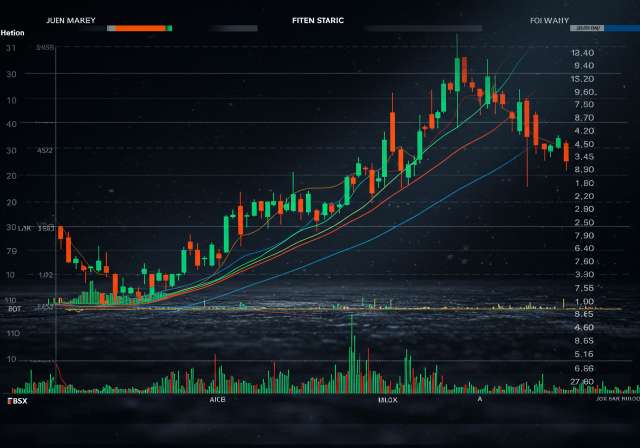
Demystifying F&O trading in India: Learn about futures, options, strategies, risks & rewards. Navigate the NSE/BSE with confidence and make informed trading dec
Demystifying F&O trading in India: Learn about futures, options, strategies, risks & rewards. Navigate the NSE/BSE with confidence and make informed trading decisions.
Unlock Potential: A Comprehensive Guide to Futures & Options Trading
Introduction: Decoding the Derivatives Market
The Indian stock market offers a plethora of opportunities for investors, ranging from the straightforward equity markets to the more complex world of derivatives. Among the derivative instruments, Futures and Options, commonly known as F&O, hold a significant position. This guide aims to provide a comprehensive understanding of F&O trading in the Indian context, particularly for those looking to expand their investment horizons beyond traditional avenues like SIPs in mutual funds, ELSS for tax saving, or government-backed schemes like PPF and NPS.
While investing in equities directly offers ownership in a company, F&O trading presents a different ballgame. It allows you to bet on the future price movements of an asset without actually owning it. This opens doors to potential profits, but also carries a significant level of risk. Before diving in, it’s crucial to understand the fundamentals, strategies, and risk management techniques associated with F&O trading.
Understanding Futures Contracts
A futures contract is an agreement to buy or sell an asset at a predetermined price on a specified future date. This date is known as the expiry date. In India, futures contracts are primarily traded on the National Stock Exchange (NSE) and the Bombay Stock Exchange (BSE).
Key Features of Futures Contracts:
- Underlying Asset: This could be a stock, an index (like Nifty 50 or Sensex), a commodity, or even a currency.
- Contract Size (Lot Size): The minimum quantity of the underlying asset that must be traded in one contract. The NSE and BSE specify the lot sizes for different assets. For instance, Nifty 50 futures might have a lot size of 50.
- Expiry Date: Futures contracts typically expire on the last Thursday of the month. The NSE and BSE provide a calendar of expiry dates.
- Margin Requirement: Unlike buying shares outright, you don’t need to pay the full value of the contract upfront. Instead, you need to deposit a margin amount, which is a percentage of the contract value. This margin acts as collateral and covers potential losses.
- Mark-to-Market (MTM): Futures contracts are marked-to-market daily. This means that your trading account is credited or debited based on the daily price fluctuations of the contract.
Example of Futures Trading:
Let’s say you believe that Reliance Industries’ stock price will increase in the coming month. Instead of buying shares of Reliance outright, you could buy a Reliance Futures contract expiring in the next month. The lot size might be 250 shares, and the current futures price might be ₹2,500 per share. The total contract value would be 250 ₹2,500 = ₹625,000. You’ll need to pay a margin amount, say 20%, which would be ₹125,000. If Reliance’s stock price rises, the value of your futures contract will also increase, and you’ll make a profit. Conversely, if the price falls, you’ll incur a loss. The daily MTM ensures that profits and losses are realized in your account daily.
Exploring Options Contracts
An options contract gives you the right, but not the obligation, to buy or sell an underlying asset at a predetermined price (the strike price) on or before a specified date (the expiry date). There are two types of options:
- Call Option: Gives the buyer the right to buy the underlying asset at the strike price. Buyers of call options believe the price of the asset will rise.
- Put Option: Gives the buyer the right to sell the underlying asset at the strike price. Buyers of put options believe the price of the asset will fall.
Key Features of Options Contracts:
- Underlying Asset: Similar to futures, options contracts can be based on stocks, indices, commodities, or currencies.
- Strike Price: The price at which the buyer of the option has the right to buy (call option) or sell (put option) the underlying asset.
- Expiry Date: Options contracts also expire on a specific date, typically the last Thursday of the month.
- Premium: The price you pay to buy an option contract. This is your initial investment and the maximum loss you can incur as a buyer.
- Intrinsic Value and Time Value: The value of an option is composed of two parts: intrinsic value and time value. Intrinsic value is the difference between the current market price of the underlying asset and the strike price (if the option is “in the money”). Time value reflects the potential for the option to become more valuable before expiry.
Options Trading Strategies:
Options trading offers a variety of strategies to suit different market conditions and risk appetites. Some common strategies include:
- Buying a Call Option: Used when you expect the price of the underlying asset to rise significantly.
- Buying a Put Option: Used when you expect the price of the underlying asset to fall significantly.
- Selling a Call Option (Covered Call): Used when you own the underlying asset and want to generate income from it.
- Selling a Put Option: Used when you are willing to buy the underlying asset at the strike price if the price falls.
- Straddle: Buying both a call and a put option with the same strike price and expiry date. Used when you expect a large price movement but are unsure of the direction.
- Strangle: Buying a call option with a strike price above the current market price and a put option with a strike price below the current market price. Similar to a straddle, but less expensive and less sensitive to small price movements.
Risk Management in F&O Trading
F&O trading is inherently risky due to leverage. Small price movements can lead to significant profits or losses. Therefore, robust risk management is crucial for survival and success. Here are some key risk management techniques:
- Stop-Loss Orders: Place stop-loss orders to automatically exit a trade if the price moves against you beyond a certain level. This helps limit potential losses.
- Position Sizing: Don’t allocate too much capital to any single trade. Diversify your portfolio and limit the size of your F&O positions.
- Hedging: Use options or futures to protect your existing investments from potential losses. For example, you can buy a put option on a stock you own to hedge against a price decline.
- Understanding Margin Requirements: Be aware of the margin requirements and ensure you have sufficient funds in your account to cover potential losses.
- Avoiding Overtrading: Don’t trade excessively based on emotions or impulse. Stick to your trading plan and avoid chasing quick profits.
Regulatory Framework and SEBI’s Role
The Securities and Exchange Board of India (SEBI) is the regulatory body responsible for overseeing the Indian stock market, including the F&O segment. SEBI’s primary objective is to protect the interests of investors and ensure fair and transparent trading practices. SEBI sets the rules and regulations for F&O trading, including margin requirements, contract specifications, and disclosure requirements. It also monitors trading activity to detect and prevent market manipulation and insider trading.
Taxation of F&O Trading Profits
Profits from F&O trading are generally treated as speculative business income and are taxed according to your applicable income tax slab. It’s advisable to consult with a tax professional to understand the tax implications of F&O trading and ensure compliance with all applicable tax laws. Losses from F&O trading can be set off against other speculative business income. If there is no speculative business income in the year, the losses can be carried forward for up to four assessment years to be set off against future speculative business profits.
Conclusion: Is F&O Trading Right for You?
F&O trading can be a potentially lucrative avenue for sophisticated investors, offering opportunities to profit from market movements and hedge existing investments. However, it’s a high-risk, high-reward game that demands a thorough understanding of the underlying principles, strategies, and risk management techniques. Before venturing into the world of F&O trading, it’s crucial to:
- Educate yourself: Take the time to learn about futures and options contracts, trading strategies, and risk management principles. Numerous online resources, courses, and books are available.
- Start small: Begin with small positions and gradually increase your trading size as you gain experience and confidence.
- Practice with a demo account: Most brokers offer demo accounts that allow you to practice trading with virtual money without risking real capital.
- Develop a trading plan: Define your trading goals, risk tolerance, and trading strategies. Stick to your plan and avoid emotional decision-making.
- Seek professional advice: Consider consulting with a financial advisor or experienced trader to get personalized guidance and support.
Remember that investing in the stock market, including F&O trading, involves risk. There is no guarantee of profits, and you could lose money. Only invest what you can afford to lose and always prioritize sound risk management practices. Compared to more passive investment approaches like investing in debt mutual funds or contributing to government schemes, F&O trading requires active involvement and disciplined execution.