
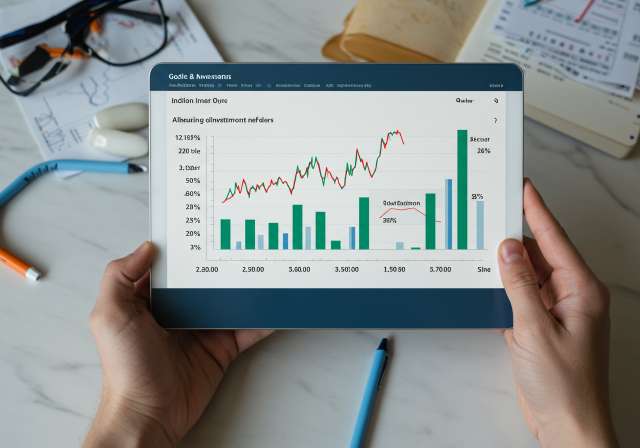
Unlock the power of digital wealth management. This comprehensive guide explores how an investment app can transform your financial journey in India, covering benefits, regulatory insights for 2026, and practical tips for smart investing.
For over fifteen years, we’ve walked alongside countless Indian families and professionals, helping them navigate the often-complex world of finance. What we’ve witnessed in the last few years is nothing short of a revolution: the rise of the investment app. Once a niche tool, these digital platforms are now central to how many of us manage our wealth, from bustling metros to burgeoning Tier 2 cities.
In today’s fast-paced India, an investment app can truly transform how we manage our wealth. These digital tools empower us with convenience and access, but they also come with their own set of considerations. We’ll explore their profound benefits, discuss the crucial regulatory aspects shaping the market towards 2026, and provide practical tips to navigate this evolving landscape wisely, ensuring your financial journey is both secure and rewarding.
The Digital Leap: Why Investment Apps Matter Today
Remember the days of endless paperwork, bank visits, and waiting weeks for a transaction to clear? Thankfully, those days are largely behind us. Investment apps have democratized access to financial markets, bringing the NSE and BSE to our fingertips. Whether you’re a seasoned investor or just starting your journey, these platforms offer unparalleled convenience.
Unpacking the Core Benefits for the Indian Investor
- Accessibility & Convenience: From the comfort of your home, you can invest in Mutual Funds, Stocks, Gold, and even government schemes like NPS and PPF. No more running around; just a few taps on your smartphone. This is especially impactful for investors in smaller towns who might not have easy access to traditional brokers.
- Direct Plan Advantage: Many apps now facilitate investments in “Direct Plans” of Mutual Funds. This means you bypass distributors and their commissions, leading to a higher Net Asset Value (NAV) over time. For a long-term SIP investor, even a small difference in expense ratio translates into Lakhs of Rupees saved over decades.
- SIP Automation: Setting up a Systematic Investment Plan (SIP) for your Mutual Funds is incredibly simple. You can automate monthly contributions, ensuring disciplined investing without constant reminders. This consistency is key to rupee cost averaging and building substantial wealth.
- Real-time Tracking & Insights: Monitor your portfolio’s performance minute-by-minute, access research reports, and get notifications on market movements. This immediate feedback helps in making informed decisions, although it can also lead to over-monitoring.
- Diversified Product Offerings: Beyond stocks and mutual funds, many apps now offer digital gold, sovereign gold bonds (SGBs), fixed deposits, and even international equities, allowing you to diversify your portfolio effectively from a single interface.
The Flip Side: Realistic Trade-offs and Hidden Risks
While the benefits are clear, it’s crucial to approach these tools with a balanced perspective. Every advantage has a potential trade-off:
- The Trap of Over-Trading: Easy access can sometimes lead to impulsive decisions or excessive trading, often driven by market noise or social media trends. This can erode returns significantly, especially with frequent entry and exit costs.
- Data Security & Privacy Concerns: You’re entrusting your financial data to a digital platform. While most reputable apps employ robust security measures, the risk of data breaches or cyber-attacks is ever-present. Always verify the app’s security protocols and read their privacy policy.
- Information Overload for Beginners: The sheer volume of data, charts, and news can be overwhelming for new investors, potentially leading to paralysis by analysis or poor choices based on incomplete understanding.
- Platform Stability & Glitches: During peak market volatility, apps can sometimes experience technical glitches or slowdowns, impacting your ability to execute trades at critical moments. This can be frustrating and costly.
- Hidden Fees & Charges: While some apps boast “zero commission,” they might have other charges like transaction fees, maintenance fees, or charges for specific services. Always read the fine print.
The Regulatory Compass: Navigating 2026 and Beyond
The financial world in India is dynamic, and regulators like SEBI (Securities and Exchange Board of India) and RBI (Reserve Bank of India) are constantly evolving their frameworks to keep pace with technological advancements and protect investors. As we look towards 2026, several key areas are likely to see increased scrutiny and refined guidelines.
SEBI’s Vision for Digital Investments
SEBI has been proactive in regulating digital investment platforms, ensuring transparency, fairness, and investor protection. By 2026, we anticipate even more stringent guidelines:
- Enhanced Data Privacy & Security: Expect stricter norms around how investment apps collect, store, and use investor data. The focus will be on robust encryption, multi-factor authentication, and clear consent mechanisms, aligning with broader data protection laws.
- Standardized Risk Profiling & Suitability: Robo-advisors and automated investment platforms will likely face enhanced requirements for accurate risk assessment and ensuring product suitability. SEBI aims to prevent investors from being steered into products that don’t match their risk appetite or financial goals.
- Transparency in Fees & Commissions: While direct plans have gained traction, SEBI will continue to push for greater clarity on all charges, explicit and implicit, across all investment products offered digitally. Hidden charges will become increasingly difficult to mask.
- AI/ML Governance: As apps increasingly use Artificial Intelligence and Machine Learning for recommendations and portfolio management, SEBI is expected to lay down guidelines on algorithmic transparency, accountability, and ethical use to prevent biases and manipulative practices.
- Grievance Redressal Mechanisms: Expect faster and more efficient digital grievance redressal systems, making it easier for investors to raise concerns and get resolutions, further strengthening investor confidence.
RBI’s Role in the Digital Ecosystem
While SEBI governs capital markets, RBI plays a crucial role in payment systems and banking, which are intrinsically linked to investment apps.
- Digital Payment Infrastructure: RBI will continue to strengthen UPI and other digital payment gateways, ensuring seamless and secure fund transfers to and from investment apps.
- Fintech Oversight: The central bank will maintain its vigilance over fintech companies, particularly those involved in lending or operating as payment aggregators within the investment app ecosystem, ensuring financial stability and consumer protection.
Choosing the Right Investment App: A Consultant’s Checklist
With dozens of apps vying for your attention, how do you pick the one that’s right for you? Our experience suggests focusing on these critical factors:
- Regulatory Compliance & Reputation: Ensure the app is registered with SEBI and is backed by a reputable financial institution. Look for apps with a strong track record and positive user reviews, but also scrutinize any red flags.
- Product Range: Does it offer what you need? If you want to invest in Mutual Funds (especially direct plans), stocks, ELSS, NPS, or even SGBs, ensure the app supports these.
- Fee Structure: Understand all charges – brokerage, transaction fees, annual maintenance charges (AMC), and any hidden costs. A “zero brokerage” claim might mean higher charges elsewhere.
- User Interface (UI) & Experience (UX): An intuitive, easy-to-navigate interface is paramount. It should be simple to understand, execute trades, and track your portfolio without unnecessary complications.
- Customer Support: In times of need, responsive and knowledgeable customer support is invaluable. Check for multiple support channels (phone, email, chat) and their response times.
- Security Features: Look for features like two-factor authentication, biometric logins, and robust data encryption. Your financial security should be non-negotiable.
Pro-Tips for the Savvy Indian Investor (2024-2026)
Here’s where practical advice truly comes into play, tailored for the Indian landscape:
- Prioritize Direct Mutual Funds: Always opt for Direct Plans over Regular Plans when investing in Mutual Funds via an app. The difference in expense ratio, often 0.5% to 1.5% annually, compounds significantly over the long term, translating into potentially Lakhs of rupees more in your corpus.
- Leverage ELSS for Tax Savings: For those under the old tax regime, Equity Linked Savings Schemes (ELSS) offer Section 80C tax benefits (up to Rs. 1.5 Lakhs) with a relatively short lock-in period of three years. An investment app makes investing in ELSS funds extremely convenient, allowing you to meet your tax-saving goals digitally.
- Don’t Forget NPS & PPF: Many investment apps now integrate NPS (National Pension System) contributions, a powerful long-term retirement savings tool. While PPF (Public Provident Fund) usually requires a bank account, some platforms offer links or guidance. Don’t underestimate the power of these government-backed schemes for long-term, tax-efficient wealth creation.
- Understand the New vs. Old Tax Regime (2024-2026): The choice between the new and old tax regimes significantly impacts your investment strategy. If you choose the new regime, many traditional deductions (like 80C for ELSS or HRA) are forgone, making direct equity or non-tax-saving mutual funds more appealing without the compulsion of specific tax-saving instruments. Analyze your overall income and deductions carefully.
- Diversify Beyond Equities: While equities offer growth potential, don’t put all your eggs in one basket. Use your app to diversify into debt funds, gold (digital gold or SGBs), and even international funds to mitigate risk and capture different market cycles.
- Set Up Nominees Diligently: This is a crucial, often overlooked step. Ensure nominees are correctly updated for all your investments on the app. It simplifies the process for your loved ones in unforeseen circumstances.
- Regular Portfolio Review: Don’t just invest and forget. Use the app’s tracking features to review your portfolio quarterly or semi-annually. Rebalance if necessary, especially if your asset allocation deviates significantly from your target.
- Beware of FOMO (Fear Of Missing Out): Market highs can lead to irrational exuberance, and market lows can induce panic. Stick to your financial plan and avoid making emotional decisions based on short-term market movements or social media hype.
Case Study: Mrs. Sharma’s Digital Investment Journey
Meet Mrs. Priya Sharma, a 38-year-old marketing professional in Bengaluru. With a demanding job and a young family, she found traditional investing cumbersome. Three years ago, she started using an investment app on our recommendation. She set up monthly SIPs into a diversified portfolio of equity and debt mutual funds, choosing direct plans for cost efficiency. For her tax planning, she allocated a portion of her 80C contribution to an ELSS fund via the same app. She also uses the app to buy Sovereign Gold Bonds during government tranches, adding stability to her portfolio.
Priya appreciates the app’s intuitive interface, which allows her to track her family’s wealth, adjust SIP amounts, and get notifications on her investments. She reviews her portfolio every six months, rebalancing if needed. While she initially worried about data security, the app’s multi-factor authentication and bank-grade encryption gave her peace of mind. Her commitment to disciplined investing, facilitated by the app, has seen her corpus grow steadily, putting her firmly on track for her long-term financial goals.
Understanding Tax Implications: A Quick Reference
Taxation is a critical aspect of investing in India. Here’s a simplified overview of how different investment avenues are typically treated under the Indian tax laws, which remain largely consistent between 2024-2026, assuming no major changes in the upcoming budgets:
| Investment Type | Holding Period | Tax Treatment | Tax Regime Impact (New vs. Old) |
|---|---|---|---|
| Equity Mutual Funds/Stocks | Short Term (< 1 Year) | STCG @ 15% (plus cess) | Taxable in both regimes. |
| Equity Mutual Funds/Stocks | Long Term (> 1 Year) | LTCG @ 10% on gains exceeding INR 1 Lakh in a financial year (no indexation benefit). | Taxable in both regimes. |
| Debt Mutual Funds | Short Term (< 3 Years) | STCG as per investor’s income tax slab. | Taxable in both regimes. |
| Debt Mutual Funds | Long Term (> 3 Years) | LTCG @ 20% with indexation benefit (pre-April 2023). Post-April 2023, taxed as STCG. | Taxable in both regimes. |
| ELSS Funds | Lock-in 3 Years (Equity) | LTCG @ 10% on gains exceeding INR 1 Lakh after lock-in. 80C deduction up to 1.5 Lakhs (investment). | 80C deduction only in Old Regime. Gains taxable in both. |
| PPF (Public Provident Fund) | 15 Years Lock-in | E-E-E (Exempt-Exempt-Exempt): Investment, interest, and maturity are all tax-exempt. | 80C deduction for investment only in Old Regime. Interest/Maturity exempt in both. |
| NPS (National Pension System) | Till Retirement | 80C/80CCD(1B) deduction for investment. Up to 60% of corpus tax-free on maturity. Annuity portion taxed as income. | 80C/80CCD(1B) deduction for investment only in Old Regime. Maturity/Annuity taxable in both. |
(Note: Tax laws are subject to change. Always consult a tax advisor for personalized guidance.)
The Path Forward: Empowered Investing
The digital age has brought unprecedented opportunities for Indian investors. An investment app, when chosen wisely and used with discipline, can be a powerful ally in your financial journey. It empowers you with control, transparency, and convenience, making wealth creation accessible to millions.
However, remember that technology is a tool, not a magic wand. The fundamentals of sound investing – understanding your goals, managing risk, diversifying, and staying disciplined – remain paramount. As your financial consultants, we encourage you to embrace these digital innovations but always combine them with informed decision-making and a long-term perspective. Your financial future is in your hands, and with the right tools and knowledge, it’s brighter than ever.
Frequently Asked Questions
What are the primary security measures I should look for in an investment app?
Look for apps that offer two-factor authentication (2FA), biometric logins (fingerprint/face ID), robust data encryption (e.g., 256-bit SSL), and are regulated by SEBI. Check their privacy policy and ensure they do not share your data without explicit consent.
Is it safer to invest directly through a fund house website or an investment app?
Both methods can be safe, provided they are regulated and reputable. Investment apps offer convenience by aggregating multiple fund houses and investment options in one place. Direct fund house websites are also secure but require managing multiple logins if you invest across various funds.
What’s the main difference between Direct and Regular Mutual Funds on an app?
Direct Plans have a lower expense ratio because they don’t include distributor commissions, leading to higher returns over the long term. Regular Plans include a commission for the distributor/advisor, resulting in a slightly lower NAV growth. Always choose Direct Plans if you are comfortable managing your own investments.
Can beginners use investment apps effectively, or are they only for experienced investors?
Investment apps are increasingly designed to be user-friendly for beginners, offering simplified interfaces, educational resources, and even robo-advisory services. However, beginners should start with simpler investments like index funds or diversified mutual funds, avoid speculative trading, and educate themselves thoroughly before investing.
Are there any hidden charges I should be aware of when using investment apps?
While many apps advertise “zero brokerage,” always check for other charges like annual maintenance charges (AMC), transaction fees for specific products (e.g., gold), demat account charges, payment gateway fees, or charges for advanced features. Reading the Key Information Document (KID) and terms and conditions is crucial.
Disclaimer: Investments in securities markets are subject to market risks, read all the related documents carefully before investing. This article is for informational purposes only and does not constitute financial advice. Please consult a qualified financial advisor before making any investment decisions.


