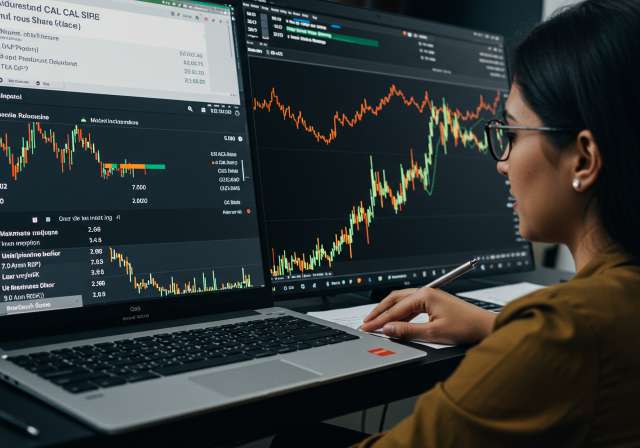
For over fifteen years, we’ve walked alongside countless Indian investors, from wide-eyed beginners to seasoned market veterans. We’ve seen trends come and go, witnessed market booms and busts, and consistently advised on the timeless principles of wealth creation. Today, a new wave is sweeping across our financial landscape: the promise of a “free trading app.” These platforms, with their zero-brokerage claims and user-friendly interfaces, have undeniably democratized access to the stock markets, inviting millions of new participants from every corner of India.
This article isn’t just about listing features; it’s about providing you, the Indian investor, with a clear, mentor-like perspective on what these apps truly offer and where you need to exercise caution. We’ll explore the benefits and the often-overlooked trade-offs, discuss the crucial regulatory environment, and arm you with practical tips to navigate this exciting, yet sometimes tricky, domain. Our aim is to empower you to distinguish between genuine value and clever marketing, helping you build a robust financial future.
In essence, while a free trading app lowers the entry barrier to investing, it’s vital to understand that ‘free’ rarely means without cost entirely. We’ll guide you through the hidden charges, regulatory safeguards by SEBI and RBI, and crucial tax implications under the 2024-2026 regime. Our practical advice will help you use these tools wisely, aligning them with your long-term financial goals and existing investments like SIPs, ELSS, PPF, and NPS.
The Promise of ‘Free’ Brokerage: What Does It Really Mean for You?
The headline feature of many modern trading apps is the offer of “zero brokerage” on equity delivery trades and often very low rates for intraday or futures & options (F&O) segments. This sounds fantastic, doesn’t it? For someone just starting out, or even an active trader, the idea of not paying a percentage of your trade value as commission is incredibly appealing. Historically, brokerage charges could eat into a significant portion of your profits, especially for smaller trades or frequent activity.
Benefits and Their Undercurrents
- Reduced Entry Barrier: With minimal or no brokerage, more Indians, particularly younger investors, feel comfortable taking their first steps into the equity markets, be it on the NSE or BSE. This fosters financial inclusion, which is a positive development for our economy.
- Cost Savings for Active Traders: For those who trade frequently, the cumulative savings on brokerage can be substantial. Imagine saving thousands of rupees each month that would otherwise go to commissions.
- Encourages Direct Investing: Many of these platforms also promote direct mutual fund investments, bypassing regular plans that carry distributor commissions. This can result in significant savings over the long term, allowing your money to compound more effectively.
However, as experienced advisors, we’ve learned that in finance, nothing is truly free. When a service is offered without a direct cost, the provider usually generates revenue elsewhere. This isn’t necessarily sinister, but it’s essential for you to be aware. Here are some realistic trade-offs and potential hidden risks:
- Hidden Charges and Levies: While brokerage might be zero, you still have to pay statutory charges like STT (Securities Transaction Tax), transaction charges to exchanges (NSE/BSE), SEBI turnover fees, stamp duty, and Goods and Services Tax (GST) on these charges. There are also DP (Depository Participant) charges when you sell shares from your demat account, which can be around ₹13.5 + GST per scrip per day, regardless of quantity. These are not hidden, but often not highlighted in the “free” narrative.
- Payment for Order Flow (PFOF) Concerns: While not officially prevalent or regulated in India like in some Western markets, the concept of brokers routing orders to specific market makers for a fee is a growing discussion globally. SEBI keeps a close watch on such practices to ensure market fairness and best execution for investors. We expect regulatory clarity and stringent oversight to prevent any conflict of interest by 2026.
- Potential for Overtrading: The very ease and ‘freeness’ can sometimes encourage excessive trading, especially among novice investors. Without the friction of brokerage costs, there’s less disincentive for speculative or impulsive trades, which often leads to losses rather than gains. Remember, successful investing is often about patience, not perpetual activity.
- Limited Research and Advisory Services: “Free” apps might offer basic tools and research, but they typically lack the in-depth, personalized research reports, dedicated relationship managers, or advisory services that full-service brokers provide. For complex financial planning, this can be a significant drawback.
Navigating the Indian Regulatory Landscape: What to Expect by 2026
India’s financial markets are robustly regulated, primarily by the Securities and Exchange Board of India (SEBI) for capital markets and the Reserve Bank of India (RBI) for banking and currency. As the financial technology space evolves rapidly, so does our regulatory framework. By 2026, we anticipate even greater scrutiny and refinement in several areas pertinent to these apps:
- Investor Protection and Grievance Redressal: SEBI is continuously strengthening mechanisms for investor protection. By 2026, we expect clearer, faster, and more transparent grievance redressal systems, especially concerning glitches, unauthorized trades, or data breaches on trading platforms.
- Algorithmic Trading and Data Privacy: As apps increasingly use AI and algorithms, SEBI will likely implement stricter guidelines around algorithmic fairness, transparency in trading execution, and robust data privacy protocols. Your personal and trading data are invaluable, and their protection will be paramount. We anticipate further rules on how platforms can use your data and stricter consent requirements.
- Transparency in Fees and Charges: While many charges are statutory, SEBI pushes for absolute transparency. We foresee clearer display of all charges, including DP charges, on trade confirmations and statements, making it impossible for platforms to genuinely hide costs.
- Cybersecurity Standards: Given the increasing sophistication of cyber threats, the RBI and SEBI will continue to mandate enhanced cybersecurity standards for all financial platforms. This means multi-factor authentication, robust encryption, and regular security audits will become even more stringent by 2026.
- Financial Education Mandates: Regulators understand the influx of new investors. We might see mandates for apps to incorporate more extensive educational modules, risk assessment tools, and even mandatory disclaimers about the speculative nature of certain trades, particularly in F&O.
Always ensure any platform you use is registered with SEBI as a Stock Broker. This provides you a critical layer of protection and recourse.
Beyond Zero Brokerage: Building a Holistic Indian Portfolio
A free trading app is a tool, not a complete financial plan. Our advice has always been to look at your entire financial ecosystem. How do these apps fit in with your long-term wealth creation strategies?
Direct vs. Regular Mutual Funds
Many “free” apps champion direct mutual fund investments, which is a commendable move. Direct plans have a lower expense ratio because they don’t include distributor commissions. Over decades, this difference can amount to lakhs of rupees. For example, a 0.5% difference in expense ratio on a SIP of ₹10,000 per month for 20 years can mean an additional ₹3-4 Lakhs in your pocket, assuming a 12% return.
However, regular plans, while more expensive, come with the advice of a financial distributor or advisor. If you’re comfortable doing your own research and managing your portfolio, direct is superior. If you need hand-holding and personalized advice, a SEBI-registered Investment Advisor (RIA) or a good distributor might be worth the slightly higher cost.
| Feature | Direct Plan | Regular Plan |
|---|---|---|
| Expense Ratio | Lower (e.g., 0.5% – 1.5%) | Higher (e.g., 1.0% – 2.5%) |
| Commission | None | Includes distributor/advisor commission |
| Advice | Self-managed; research required | Comes with distributor/advisor guidance |
| Long-Term Returns | Potentially higher due to lower costs | Potentially lower due to higher costs |
| Suitability | Savvy, self-directed investors | Investors seeking advice and guidance |
SIPs and Long-Term Investing
The ease of setting up Systematic Investment Plans (SIPs) for mutual funds or even for direct equity purchases through these apps is a boon. We’ve always advocated for SIPs as a disciplined way to build wealth, averaging out market volatility. Use the app’s capabilities to automate your long-term investments.
Traditional Instruments: ELSS, PPF, NPS
Don’t forget the power of traditional, tax-efficient instruments like ELSS (Equity Linked Savings Scheme) for Section 80C benefits, Public Provident Fund (PPF) for guaranteed returns and tax savings, and the National Pension System (NPS) for retirement planning. While most trading apps don’t directly offer PPF, they might facilitate NPS or ELSS investments. A balanced portfolio includes a mix of these instruments, offering diversification beyond just direct equity.
Pro-Tips for the Savvy Indian Investor
Here’s our seasoned advice to help you make the most of the new-age trading platforms, while safeguarding your interests:
- Read the Fine Print, Always: Before signing up, carefully review the fee schedule, terms and conditions. Understand every single charge you might incur – not just brokerage. Ask for clarification if something is unclear.
- Diversification is Key: Never put all your capital into a single stock or even a single asset class. Use these apps to invest across various sectors, market caps, and even different asset classes (like direct equity, mutual funds, perhaps gold ETFs) to spread your risk.
- Align with Financial Goals: Your investments should always be tied to specific goals – buying a home, child’s education, retirement. Don’t just trade for the sake of it. A short-term trading app might not be the best place for your long-term retirement corpus unless it’s a small, actively managed portion.
- Educate Yourself Continuously: The markets are dynamic. Rely on credible sources for information, not just social media tips. Most good apps provide some educational content; utilize it. Understand technical and fundamental analysis.
- Implement Risk Management: Use tools like stop-loss orders to limit potential losses on individual trades. Never invest more than you can afford to lose. Define your position sizing carefully.
- Understand Tax Implications (2024-2026 Tax Regime):
- Equity & Equity Mutual Funds:
- Short-Term Capital Gains (STCG): If you sell equity shares or equity mutual fund units within one year of purchase, the gains are taxed at a flat 15% plus surcharge and cess.
- Long-Term Capital Gains (LTCG): If you sell after one year, gains up to ₹1 Lakh per financial year are exempt. Gains exceeding ₹1 Lakh are taxed at 10% without indexation benefit, plus surcharge and cess.
- Debt Mutual Funds: Gains are now taxed at your slab rate, regardless of holding period, for investments made after April 1, 2023.
- New vs. Old Tax Regime (for income other than capital gains): While capital gains tax rules remain largely consistent, be mindful of which tax regime you’ve chosen (or are defaulting to). Your overall income tax planning needs to consider this.
Always consult a tax advisor for personalized guidance, especially with the evolving tax landscape.
- Equity & Equity Mutual Funds:
Case Study: Rajat’s Journey with a Free Trading App
Rajat, a 28-year-old software engineer in Bengaluru, was excited by the buzz around a new free trading app. He started with ₹50,000, drawn by the zero brokerage. Initially, he made a few quick profits on intraday trades, which boosted his confidence. The “free” nature encouraged him to trade frequently, sometimes without thorough research, relying on ‘hot tips’ from online forums.
Over a few months, his account value fluctuated wildly. He overlooked the small charges – the ₹13.5 + GST DP charges on every sale, the STT, transaction charges – which, combined with some impulsive losing trades, started to erode his capital. He also realized that while he wasn’t paying brokerage, he wasn’t getting any personalized advice or in-depth research that a full-service broker might offer.
One day, a technical glitch during a volatile market move prevented him from exiting a position, leading to a substantial loss of ₹15,000. This was his turning point. He sought our advice. We helped him understand that while the app was a good tool, his approach was flawed. We guided him to reduce his trading frequency, focus on long-term investments, set up SIPs in direct mutual funds through the same app, and also diversify into ELSS for tax savings. He still uses the app, but now with discipline, clear goals, and a much better understanding of all associated costs and risks. Rajat learned that “free” brokerage doesn’t exempt you from the need for financial discipline and knowledge.
Choosing Wisely: What to Look For in a Trading App
When selecting a platform, especially one that promises ‘free’ services, consider these critical aspects:
- Regulatory Compliance: Is the broker properly registered with SEBI? Check their SEBI registration number. This is non-negotiable.
- User Interface and Experience: Is the app intuitive, stable, and easy to navigate? A clunky interface can lead to errors and frustration.
- Customer Support: What’s their track record for resolving issues? Do they offer multiple channels (phone, chat, email)? A quick response time is crucial during market hours.
- Research and Educational Resources: While not a full-service broker, do they offer basic market insights, news, charts, or educational content to help you make informed decisions?
- Security Features: Look for strong authentication methods (e.g., 2FA, biometric login), encryption, and a clear privacy policy.
- Range of Products: Does the app offer what you need? Equities, mutual funds (direct is preferred), F&O, IPOs, SGBs (Sovereign Gold Bonds)?
- Transparency in Charges: Do they clearly display all charges upfront, including statutory levies and less common charges like DP charges?
The Bottom Line: Knowledge and Discipline are Your Real Assets
The advent of the free trading app is a game-changer for Indian investors. It has made markets accessible and affordable. However, the true cost of investing isn’t just about brokerage; it’s about the financial decisions you make. “Free” tools are powerful, but like any power, they demand responsibility and understanding.
As your financial mentors, we urge you to embrace these platforms with an informed perspective. Focus on your long-term goals, diversify diligently, educate yourself continuously, and always remember that market investments carry inherent risks. The real ‘free’ advantage comes from your knowledge, discipline, and a well-thought-out financial plan. Happy investing!
Frequently Asked Questions
1. Are free trading apps truly free?
While many free trading apps offer zero brokerage on equity delivery trades, they are not entirely free. You still pay statutory charges like STT, transaction charges, SEBI turnover fees, stamp duty, GST, and typically DP charges when you sell shares.
2. What are the common hidden charges in these apps?
The most common “hidden” or less highlighted charge is the DP (Depository Participant) charge, levied when you sell shares from your demat account. Other statutory charges, while not hidden, might not be explicitly mentioned in the “zero brokerage” claims.
3. How do I ensure my money is safe with a free trading app?
Ensure the app’s broker is registered with SEBI. Look for robust security features like two-factor authentication, strong encryption, and a clear privacy policy. Your funds should always be held in a client-segregated bank account, as mandated by SEBI.
4. Can I invest in Mutual Funds, PPF, and NPS through these apps?
Many free trading apps allow direct mutual fund investments (which have lower expense ratios than regular plans). Some may facilitate NPS. However, PPF investments are typically done through banks or post offices, not directly via trading apps.
5. What are the tax implications of trading through these apps in India?
Gains from equity shares and equity mutual funds are subject to Short-Term Capital Gains (STCG) tax at 15% (if sold within 1 year) or Long-Term Capital Gains (LTCG) tax at 10% on gains above ₹1 Lakh (if sold after 1 year). Debt mutual fund gains are taxed at your income slab rate. Always consult a tax advisor for specific guidance.
Disclaimer: This article is for informational purposes only and does not constitute financial advice. Investors should consult with a qualified financial advisor before making any investment decisions. Investments in securities markets are subject to market risks, read all the related documents carefully before investing.