Navigating the dynamic world of Indian stock markets requires a blend of knowledge, discipline, and a keen understanding of local nuances. This guide cuts through the noise, offering clear, actionable insights into intraday trading. We’ll explore its mechanics, weigh the potential for quick gains against significant risks, and equip you with practical strategies tailored for the Indian market, keeping an eye on evolving SEBI regulations and tax implications up to 2026. This isn’t just theory; it’s a mentor’s perspective on how to approach this high-stakes game responsibly.
For over fifteen years, we’ve seen countless individuals drawn to the allure of the stock market, many captivated by the swift movements and the promise of quick returns that intraday trading seems to offer. It’s a segment of the market where stocks are bought and sold within the same trading day, aiming to profit from small price fluctuations. While the potential for rapid gains is real, so is the risk of significant losses. Our role, as your seasoned guide, is to help you understand this often misunderstood domain, grounding it in the realities of the Indian market, its evolving regulations, and the discipline it demands.
What Exactly is Intraday Trading in the Indian Context?
At its core, intraday trading means squaring off all your positions before the market closes for the day. You’re not looking to hold stocks for days, weeks, or years like long-term investors. Instead, your goal is to capitalize on the day’s volatility, buying low and selling high, or even selling high and buying low (short-selling) if you anticipate a price drop. The entire operation happens within the trading hours of the National Stock Exchange (NSE) or Bombay Stock Exchange (BSE), typically from 9:15 AM to 3:30 PM.
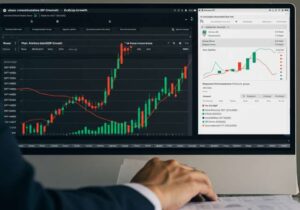
Unlike long-term investing, where you might focus on a company’s fundamentals – its earnings, management, market share – intraday trading primarily relies on technical analysis. This involves studying charts, patterns, and indicators to predict short-term price movements. For an Indian trader, this often means closely watching indices like the Nifty 50 or Sensex, understanding global cues, and reacting swiftly to news impacting specific sectors or companies.
The Allure: Why Intraday Trading Captivates Many
The primary draw for many is the potential for quick profits. With volatile stocks, even a movement of a few rupees can translate into decent gains on a substantial quantity. Brokerages also offer what’s called ‘intraday margin,’ allowing you to trade with more capital than you actually possess. For example, if a broker offers 5x margin, you can trade shares worth ₹5 Lakhs by only putting up ₹1 Lakh of your own capital. This magnification of trading power can be a double-edged sword, significantly increasing both potential profits and losses.
Another benefit is the reduced exposure to overnight market risks. Since all positions are closed by day-end, you don’t have to worry about how global markets perform or significant news breaking after market hours that could cause a stock to gap up or down the next morning. This can appeal to those who prefer a clean slate each day.
The Reality: Significant Risks and Trade-offs
While the allure is strong, the risks are equally pronounced. The same margin that amplifies gains can catastrophically magnify losses. A small adverse price movement can wipe out a significant portion of your capital, or even lead to a margin call, forcing you to add more funds or your positions will be automatically squared off at a loss. We’ve seen many enthusiastic beginners get caught in this trap.
The short time horizon also means that intraday trading is highly susceptible to market noise and sudden, unpredictable price swings. A rumour, a large institutional order, or even a technical glitch can send a stock spiraling, leaving little time to react. Emotion plays a huge role here; fear and greed often override rational decision-making, leading to impulsive trades and poor judgment.
Furthermore, the transaction costs, including brokerage, STT (Securities Transaction Tax), exchange turnover charges, stamp duty, and GST, can eat into small profits. Even if you make a modest gain on a trade, the cumulative charges over multiple trades can make it difficult to be consistently profitable.
Essential Tools for the Indian Intraday Trader
To navigate this landscape, you need the right tools and a disciplined approach:
- Reliable Brokerage Platform: Choose a broker known for its robust and fast trading platform. Discount brokers like Zerodha, Upstox, or 5Paisa have revolutionized access for Indian traders, offering low brokerage fees, especially for intraday trades. Ensure their charts and order execution are seamless.
- Technical Analysis Software: While many brokers provide integrated charting tools, dedicated software or platforms like TradingView can offer more advanced indicators and charting capabilities crucial for detailed analysis.
- Real-time News and Data Feeds: Staying updated on macroeconomic indicators, corporate announcements, and global market movements (especially US and Asian markets) is vital. Financial news portals, business channels, and dedicated market data platforms are essential.
- Risk Management Strategy: This is arguably the most crucial tool. It involves setting stop-loss orders to limit potential losses and defining position sizes based on your capital and risk tolerance. Never risk more than a small percentage of your capital on any single trade.
- Trading Journal: A simple spreadsheet or notebook where you record every trade, your entry/exit points, reasons for the trade, and the outcome. This helps in identifying patterns in your trading behaviour and refining your strategy.
SEBI/RBI Regulations & the 2026 Horizon
The regulatory landscape in India is constantly evolving, with SEBI (Securities and Exchange Board of India) and RBI (Reserve Bank of India) playing crucial roles in safeguarding investor interests and maintaining market integrity. As we look towards 2026, we anticipate continued tightening of norms, particularly affecting intraday trading.
- Margin Requirements: SEBI has progressively increased margin requirements for intraday trading over the past few years, moving towards a uniform peak margin system. By 2026, we could see further rationalization, potentially reducing the extreme leverage previously available. This is a positive step for risk management but means traders need more capital to take similar positions.
- Algorithmic Trading Scrutiny: While not directly impacting individual intraday traders significantly, SEBI is enhancing its surveillance on algorithmic and high-frequency trading. Any new rules in this area could influence market microstructure and volatility, which intraday traders rely on.
- Investor Protection: Expect continued emphasis on investor education and grievance redressal mechanisms. SEBI’s efforts aim to make the market safer, but traders must still exercise due diligence.
- Brokerage Oversight: SEBI continues to monitor brokerages closely to ensure compliance with margin rules, proper disclosure, and ethical practices. Choosing a SEBI-registered broker with a clean track record is non-negotiable.
These regulatory shifts are designed to bring more stability and reduce systemic risk, creating a more level playing field for all. However, it also means traders need to be aware that the “wild west” days of unlimited leverage are firmly behind us.
Tax Implications: Navigating the 2024-2026 Regime
Understanding the tax implications of intraday trading is critical for any Indian investor. The tax treatment differs significantly from long-term capital gains. Profits from intraday trading are generally treated as “speculative business income” rather than “capital gains.”
- Speculative Business Income: This income is added to your other income (salary, house property, etc.) and taxed at your applicable income tax slab rates. This means if you are in the 30% tax bracket, your intraday profits will be taxed at 30%.
- Losses: Intraday losses (speculative losses) can only be set off against speculative gains. They cannot be set off against any other income (like salary, house property, or non-speculative business income). Unabsorbed speculative losses can be carried forward for up to four assessment years, but again, they can only be set off against future speculative gains.
- ITR Forms: You will typically need to file an ITR-3 form, which is for income from business or profession. This requires maintaining proper books of accounts, even if you are not formally registered as a business.
- New Tax Regime (Optional): The new tax regime, which offers lower tax rates but requires foregoing certain deductions (like 80C, HRA, etc.), is also applicable to speculative business income. You must choose which regime is more beneficial to you after considering all your income sources and potential deductions.
Here’s a simplified look at how tax might apply to speculative business income under the existing and new tax regimes for an individual:
| Income Slab (Old Tax Regime) | Tax Rate | Income Slab (New Tax Regime) | Tax Rate |
|---|---|---|---|
| Up to ₹2.5 Lakhs | Nil | Up to ₹3 Lakhs | Nil |
| ₹2.5 Lakhs – ₹5 Lakhs | 5% | ₹3 Lakhs – ₹6 Lakhs | 5% |
| ₹5 Lakhs – ₹10 Lakhs | 20% | ₹6 Lakhs – ₹9 Lakhs | 10% |
| Above ₹10 Lakhs | 30% | ₹9 Lakhs – ₹12 Lakhs | 15% |
| – | – | ₹12 Lakhs – ₹15 Lakhs | 20% |
| – | – | Above ₹15 Lakhs | 30% |
(Note: Surcharge and Cess apply over and above these rates based on income levels. Tax laws are complex and subject to change; always consult a tax advisor.)
Pro-Tips for Success in the Indian Intraday Market
After years of observing market participants, we’ve distilled some key principles:
- Start Small, Learn Big: Don’t commit a large chunk of capital initially. Begin with a very small amount you’re comfortable losing, and focus on learning the ropes. Many successful traders started with virtual trading platforms before risking real money.
- Master Risk Management: This cannot be overstated. Always define your maximum acceptable loss per trade before entering. Use stop-loss orders religiously. A common rule is the 1% or 2% rule: never risk more than 1-2% of your total trading capital on a single trade. If you have ₹1 Lakh, don’t risk more than ₹1,000-₹2,000 per trade.
- Choose Liquid Stocks: Focus on highly liquid stocks (e.g., Nifty 50 or F&O stocks) that have high trading volumes. This ensures you can enter and exit positions easily without significantly impacting the price, avoiding situations where you’re stuck with a position.
- Emotional Discipline is Key: The market is a magnet for emotions. Greed pushes you to hold winning trades too long, hoping for more, while fear makes you exit profitable trades too early or hold onto losing trades, hoping they’ll recover. Develop a trading plan and stick to it without letting emotions dictate your actions.
- Understand Technical Analysis: Learn to read charts (candlestick patterns), identify support and resistance levels, and use indicators like Moving Averages, RSI, MACD, and Bollinger Bands. These are your compass in the intraday wilderness.
- Focus on a Few Stocks/Sectors: Instead of tracking hundreds of stocks, become an expert in a few. Understand their typical behaviour, news drivers, and liquidity patterns. This familiarity often yields better results.
- Protect Your Capital: Your primary goal in intraday trading is capital preservation, not quick riches. If you protect your capital, you live to trade another day.
Case Study: Anuj’s Journey with Intraday Trading
Consider Anuj, a 32-year-old software engineer from Hyderabad. He initially heard stories of friends making quick money and decided to jump in with ₹50,000, hoping to supplement his income. He started by buying stocks he “felt” would go up, often without a stop-loss. Within a month, he lost ₹15,000 – a painful lesson.
Discouraged but not defeated, Anuj decided to educate himself. He spent three months studying technical analysis, understanding risk management, and backtesting strategies. He then restarted with ₹30,000, diligently applying a 1% risk rule per trade and always placing a stop-loss. He focused on just 5-6 Nifty 50 stocks, observing their patterns. He maintained a trading journal, noting his mistakes and successes.
Initially, his returns were modest, sometimes even small losses. But over six months, his consistency improved. He learned when to stay out of the market (during high uncertainty) and when to seize opportunities. While he didn’t become a millionaire overnight, he developed a consistent side income, averaging ₹8,000-₹12,000 a month after taxes, solely through disciplined intraday trading. Anuj’s story is a reminder that success isn’t about luck; it’s about education, discipline, and stringent risk management.
Building a Disciplined Approach to the Market
Intraday trading isn’t a get-rich-quick scheme; it’s a profession that demands respect, continuous learning, and an unwavering commitment to discipline. It’s about knowing yourself as much as knowing the market. Your emotional control, patience, and ability to stick to a plan are far more valuable than any fancy indicator or hot tip. Remember, the market will always be there. Your capital, once lost, is much harder to recover.
We’ve always advised our clients to have a solid financial foundation first. Ensure you have an emergency fund, adequate insurance, and are contributing to long-term goals through avenues like SIPs in Mutual Funds (Direct Plans for lower expense ratios), ELSS for tax savings, PPF, or NPS. Intraday trading should only be pursued with truly discretionary capital – money whose loss would not impact your core financial well-being.
In conclusion, while intraday trading offers exciting opportunities for those who understand its dynamics, it is not for the faint of heart or the unprepared. Approach it with the seriousness it deserves, arm yourself with knowledge, practice unwavering discipline, and always keep an eye on risk. The Indian market offers immense possibilities, but navigating them successfully requires a clear head and a robust strategy.
Frequently Asked Questions
Is intraday trading suitable for beginners?
While beginners can learn, it’s generally considered high-risk. We advise starting with thorough education, small capital, and a strong emphasis on risk management before venturing into it seriously.
What is the minimum capital required for intraday trading in India?
There’s no fixed minimum, but given brokerage margins and costs, a starting capital of at least ₹15,000 to ₹25,000 is practical to allow for sufficient position sizing and to cover costs without quickly eroding capital on small losses.
How are intraday trading profits taxed in India?
Intraday profits are treated as ‘speculative business income’ and are added to your total income, taxed at your applicable income tax slab rates. Losses can only be set off against future speculative gains for up to four years.
Can I convert an intraday trade to a delivery trade?
Yes, most brokers allow you to convert an intraday position to a delivery position (holding it overnight) if you have sufficient funds in your account to cover the full value of the shares, as the intraday margin will no longer apply.
What role do stop-loss orders play in intraday trading?
Stop-loss orders are crucial risk management tools. They automatically trigger a sell (or buy to cover a short position) if the stock price reaches a predetermined level, limiting your potential losses on a trade. Never trade intraday without a clear stop-loss.
Disclaimer: Investments in the securities market are subject to market risks, read all the related documents carefully before investing. This article is for informational purposes only and does not constitute financial advice. Consult a qualified financial advisor before making any investment decisions.