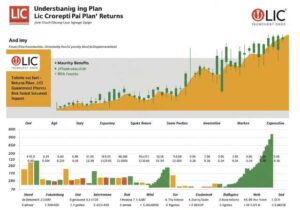
Discover the heartbeat of the Indian stock market, the nifty 50, and learn how to align your investment strategy with India’s growth story. This guide, from a seasoned Indian financial consultant, covers everything from understanding its composition to navigating tax implications and practical investment avenues for 2024-2026.
For over fifteen years, we’ve walked alongside countless Indian families and individuals, helping them make sense of the market’s ebbs and flows, and build lasting wealth. One constant question, a fundamental building block in almost every serious investment conversation, revolves around the Nifty 50. It’s more than just an index; it’s a mirror reflecting India’s economic might, capturing the pulse of our nation’s top companies. Understanding the Nifty 50 is not just about knowing market jargon; it’s about grasping the core of India’s corporate success, offering a straightforward yet potent way to participate in our growth story. This article will unpack what makes this index tick, how you, as an Indian investor, can thoughtfully integrate it into your portfolio, and what to keep in mind regarding regulations and taxation up to 2026. Think of this as a mentor’s advice, guiding you through the practicalities of a truly Indian investment.
What Exactly is the Nifty 50? The Heartbeat of Indian Equities
At its core, the Nifty 50 is a stock market index maintained by India Index Services & Products (IISL), a subsidiary of the National Stock Exchange (NSE). It comprises the 50 largest and most liquid Indian companies, representing various sectors of our economy. When you hear “the market is up” or “the market is down,” more often than not, it’s the Nifty 50 they’re referring to, as it acts as a crucial barometer for the overall health and direction of the Indian equity market. These aren’t just any companies; they are the stalwarts, the innovators, and the leaders in their respective fields, from banking and IT to pharmaceuticals and manufacturing.
Why Does the Nifty 50 Matter So Much to Us?
- A True Economic Barometer: It gives you a quick snapshot of how India’s biggest companies are performing. If the Nifty 50 is performing well, it generally signals a robust economy and positive investor sentiment.
- Liquidity and Market Depth: The companies within the Nifty 50 are highly liquid, meaning their shares can be bought and sold easily without significantly affecting their price. This makes the index a reliable benchmark.
- Diversification by Default: By investing in the Nifty 50, you’re not putting all your eggs in one basket. You’re automatically diversifying across 50 different companies and multiple sectors, a strategy that even seasoned investors swear by.
However, it’s important to remember that while the Nifty 50 offers broad exposure, it’s still concentrated in large-cap stocks. This means it might not fully capture the explosive growth potential of smaller, emerging companies, which sometimes outperform the large caps. The trade-off for stability and liquidity is often a slightly lower, though more consistent, growth trajectory compared to a truly diversified portfolio including mid and small caps.
Your Avenues to Invest in the Nifty 50: Practical Choices for Indian Investors
Participating in the Nifty 50’s journey is surprisingly accessible. You don’t need a massive capital to start. Here are the most common and effective ways an Indian investor can get involved:
1. Nifty 50 Index Mutual Funds
This is perhaps the simplest way for many. An index mutual fund is designed to replicate the performance of the Nifty 50. When you invest in such a fund, the fund manager essentially buys shares of the same 50 companies in the same proportion as they are in the index. The goal is not to outperform the Nifty 50, but to match its returns as closely as possible, minus a small expense ratio.
- Benefit: Professional management (albeit passive), diversification, and generally lower costs compared to actively managed funds. You can invest via Systematic Investment Plans (SIPs) with amounts as low as ₹500.
- Trade-off: You won’t beat the index; your returns will mirror it. Also, there’s a small expense ratio, typically 0.1% to 0.5% for direct plans, which slightly eats into your returns.
2. Nifty 50 Exchange Traded Funds (ETFs)
Nifty 50 ETFs are similar to index mutual funds but trade like stocks on the NSE and BSE. You buy and sell units of an ETF through your demat and trading account, just as you would buy shares of Reliance or TCS. Their prices fluctuate throughout the trading day based on demand and supply.
- Benefit: Often have even lower expense ratios than index mutual funds, and offer real-time trading flexibility.
- Trade-off: You need a demat account, and there are brokerage charges for buying and selling. Also, there can be a slight tracking error, meaning the ETF’s performance might not perfectly match the Nifty 50’s due to various factors.
Direct vs. Regular Mutual Funds: A Key Indian Distinction
When choosing Nifty 50 index funds, you’ll encounter “Direct” and “Regular” plans. This is a crucial distinction for your long-term wealth creation:
- Direct Plans: Purchased directly from the Asset Management Company (AMC) or through platforms that offer direct plans. They have lower expense ratios because they cut out distributor commissions. Over years, this seemingly small difference of 0.5% to 1% can translate into Lakhs of additional wealth for you.
- Regular Plans: Purchased through financial advisors, brokers, or distributors. They include a commission for the intermediary, leading to higher expense ratios.
Our advice? Always opt for Direct Plans if you’re comfortable doing a little self-service. The long-term impact on your returns is significant.
Regulatory Landscape and Investor Protection (Looking Towards 2026)
India’s financial markets are robustly regulated, primarily by the Securities and Exchange Board of India (SEBI). SEBI’s mandate is clear: protect the interests of investors and promote the development and regulation of the securities market. As we approach 2026, we foresee SEBI continuing its proactive stance on transparency, investor education, and market integrity.
Recent years have seen SEBI implement stricter disclosure norms for listed companies, tighten regulations around mutual fund expense ratios (benefiting investors in direct plans), and enhance surveillance mechanisms to curb market manipulation. For you, this means a safer, more transparent environment to invest in the Nifty 50. While specific new regulations for 2026 are always subject to evolution, the general trend is towards greater investor empowerment and reducing systemic risks.
For instance, SEBI is constantly working to simplify investment processes and improve grievance redressal mechanisms. We might see further initiatives to streamline KYC processes or enhance the digital accessibility of financial services, making it even easier for new investors from Tier 2 and Tier 3 cities to participate in the market responsibly.
Tax Implications: Navigating the 2024-2026 Tax Regimes
Understanding the tax implications of your Nifty 50 investments is paramount for maximizing your net returns. India’s tax laws for equity investments are relatively straightforward but require attention, especially with the evolving new tax regime.
Capital Gains Tax on Nifty 50 Investments (ETFs/Index Funds)
- Short-Term Capital Gains (STCG): If you sell your Nifty 50 ETF or index fund units within one year of purchase, any profit is considered STCG and taxed at a flat rate of 15% (plus applicable surcharge and cess).
- Long-Term Capital Gains (LTCG): If you sell your units after holding them for more than one year, the profits are considered LTCG. Here’s the good news: LTCG up to ₹1 Lakh in a financial year is exempt from tax. Any LTCG exceeding ₹1 Lakh is taxed at 10% (plus applicable surcharge and cess), without indexation benefit.
Dividends
Dividends received from Nifty 50 companies (or the funds holding them) are now taxable in the hands of the investor at their respective income tax slab rates, similar to other income. The Dividend Distribution Tax (DDT) was abolished, shifting the tax burden from the company to the recipient.
Old vs. New Tax Regime (2024-2026)
The government has provided taxpayers with a choice between the Old Tax Regime (with various exemptions and deductions like 80C, 80D, HRA) and the New Tax Regime (simplified, lower slab rates but fewer exemptions). This choice significantly impacts your overall tax planning.
- For Nifty 50 Investments: The capital gains and dividend taxation rules remain largely the same, regardless of which regime you choose. However, your ability to save tax through other instruments (like ELSS, PPF, NPS) might influence your regime choice, indirectly freeing up more capital for Nifty 50 linked investments.
- Strategic Tip: For most salaried individuals, if you have significant deductions under 80C (EPF, PPF, ELSS, Home Loan Principal), 80D (Health Insurance), and HRA, the Old Regime might still be beneficial. If your deductions are minimal, the New Regime’s lower slab rates could be attractive.
Comparing Tax-Saving Avenues & Nifty 50
While Nifty 50 ETFs/Index Funds don’t offer direct Section 80C benefits, they complement other tax-saving instruments. Here’s a brief comparison:
| Investment Avenue | Primary Benefit | Tax Treatment (Gains) | Flexibility | Liquidity |
|---|---|---|---|---|
| Nifty 50 Index Fund/ETF | Market-linked growth, diversification | STCG 15%, LTCG 10% (over ₹1L) | High (no lock-in, but hold for LTCG) | High |
| ELSS (Equity Linked Savings Scheme) | 80C deduction (up to ₹1.5L), market-linked growth | STCG 15%, LTCG 10% (over ₹1L) | Low (3-year lock-in) | Moderate (after lock-in) |
| PPF (Public Provident Fund) | Guaranteed returns, EEE status (exempt-exempt-exempt), 80C deduction | Tax-free | Very Low (15-year lock-in) | Low (partial withdrawals after 5 years) |
| NPS (National Pension System) | Retirement planning, 80C & 80CCD(1B) deduction | Partial withdrawal tax-free, Annuity taxable | Very Low (till retirement) | Very Low |
The table clearly shows that while ELSS also invests in equities and offers tax benefits, Nifty 50 funds offer greater flexibility. For a well-rounded portfolio, a mix of these instruments is often advisable, balancing liquidity, growth, and tax efficiency.
Pro-Tips from a Seasoned Advisor: Making Nifty 50 Work for You
Let’s talk practical strategy. Investing in the Nifty 50 isn’t just about picking a fund; it’s about aligning it with your financial goals and temperament.
1. Embrace Systematic Investment Plans (SIPs)
For most Indian investors, especially those with a regular income, SIPs are a blessing. Investing a fixed amount regularly (monthly, quarterly) in a Nifty 50 index fund or ETF helps you average out your purchase cost over time. When markets are high, your SIP buys fewer units; when they’re low, it buys more. This “rupee cost averaging” strategy removes the emotion of timing the market, which is almost impossible to do consistently.
Case Study: Anil’s Retirement Goal
Anil