
Want to dive into the Indian stock market? Learn how to easily open a trading account online! This guide covers everything from documents needed to choosing the
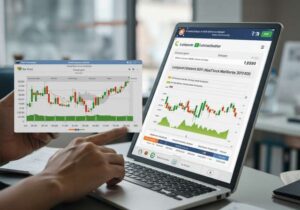
Want to dive into the Indian stock market? Learn how to easily open a trading account online! This guide covers everything from documents needed to choosing the right broker. Start your investment journey today!
Online Trading Account: Your Gateway to the Indian Stock Market
Introduction: Riding the Wave of Online Investing in India
The Indian financial landscape has undergone a seismic shift. Gone are the days of physically visiting brokerage firms and filling out reams of paperwork. Today, thanks to the power of the internet and the regulatory push from SEBI (Securities and Exchange Board of India), accessing the dynamic world of the Indian stock market has never been easier. With just a few clicks, you can open trading account online and begin your journey towards financial independence. This comprehensive guide will walk you through the entire process, from understanding the basics to making informed investment decisions.
Why Choose Online Trading? The Advantages are Clear
Before we delve into the specifics of opening an online trading account, let’s explore the compelling reasons why this approach is becoming increasingly popular among Indian investors:
- Convenience: Trade from anywhere, anytime. Whether you’re commuting, relaxing at home, or even traveling, your trading platform is accessible via your smartphone or laptop.
- Speed and Efficiency: Execute trades swiftly and efficiently. Online platforms offer real-time market data and order execution, allowing you to capitalize on opportunities as they arise.
- Cost-Effectiveness: Online brokers typically charge lower brokerage fees compared to traditional brokerage firms, saving you money on each trade. This is especially important for active traders.
- Access to Information: Online platforms provide a wealth of information, including market research reports, company financials, and expert analysis, empowering you to make informed decisions. Many offer free tools like screeners and charting software.
- Paperless Process: The entire account opening process is typically paperless, saving you time and effort. You can upload documents electronically and complete the necessary formalities online.
- Direct Market Access: You have direct access to the NSE (National Stock Exchange) and BSE (Bombay Stock Exchange), allowing you to trade directly in stocks, derivatives, and other financial instruments.
Understanding the Key Players: Brokers and Trading Platforms
The cornerstone of online trading is your broker, the intermediary between you and the stock exchange. Choosing the right broker is crucial for a smooth and successful trading experience. Here’s a breakdown of the different types of brokers:
- Full-Service Brokers: These brokers offer a wide range of services, including research reports, personalized investment advice, and wealth management solutions. They typically charge higher brokerage fees. Examples include traditional broking houses with an online presence and dedicated relationship managers.
- Discount Brokers: These brokers focus on providing low-cost trading services, offering minimal or no advisory services. They are ideal for experienced traders who are comfortable making their own investment decisions. Many offer zero-brokerage accounts for specific segments.
When selecting a broker, consider the following factors:
- Brokerage Fees: Compare the brokerage fees charged by different brokers. Look for hidden charges and ensure transparency in their fee structure. Many brokers now offer flat fee structures or percentage-based models.
- Trading Platform: Evaluate the user-friendliness, features, and stability of the trading platform. A good platform should be intuitive, reliable, and offer real-time market data. Check for mobile app availability.
- Research and Analysis Tools: Assess the quality of research reports, market analysis, and investment tools provided by the broker. These resources can help you make informed investment decisions.
- Customer Support: Choose a broker with responsive and reliable customer support. Look for multiple channels of communication, such as phone, email, and live chat.
- Regulatory Compliance: Ensure that the broker is registered with SEBI and complies with all relevant regulations.
Opening Your Online Trading Account: A Step-by-Step Guide
The process of opening an online trading account is typically straightforward and can be completed within a few hours or days, depending on the broker and the verification process. Here’s a step-by-step guide:
Step 1: Choose a Broker and Visit Their Website
Research and select a broker that aligns with your investment needs and preferences. Visit their official website and look for the “Open Account” or “Sign Up” section.
Step 2: Fill Out the Online Application Form
Complete the online application form with accurate personal and financial information. This typically includes your name, address, date of birth, PAN card details, bank account details, and income information.
Step 3: Complete the KYC (Know Your Customer) Process
As per SEBI regulations, you need to complete the KYC process to verify your identity and address. This usually involves submitting scanned copies of your identification documents (PAN card, Aadhaar card, passport, etc.) and address proof (utility bill, bank statement, etc.). Many brokers offer e-KYC, a completely online process using Aadhaar verification.
Step 4: In-Person Verification (IPV)
While most brokers offer online IPV via video call, some may require in-person verification. Check with your chosen broker for their specific IPV process.
Step 5: Account Activation
Once your application is verified and approved, your trading account will be activated. You will receive your login credentials and instructions on how to access the trading platform.
Step 6: Fund Your Account
To start trading, you need to fund your trading account. Most brokers offer various funding options, including net banking, UPI, and NEFT/RTGS transfers.
Essential Documents Required for Opening a Trading Account
Keep the following documents handy before you start the online account opening process:
- PAN Card: Mandatory for all trading accounts.
- Aadhaar Card: Used for identity and address verification. E-KYC often relies on Aadhaar.
- Proof of Address: Utility bill, bank statement, passport, or any other document accepted by the broker.
- Bank Account Details: Bank name, account number, IFSC code.
- Passport-Sized Photograph: A recent photograph for verification purposes.
- Income Proof (Optional): Required for trading in derivatives or futures and options (F&O). Documents like ITR acknowledgement, salary slips, or bank statements can be used.
Understanding Trading Jargon: Key Terms for Beginners
The stock market can seem daunting with its own set of jargon. Here are some essential terms to familiarize yourself with:
- Equity: Refers to stocks or shares of a company.
- Derivatives: Contracts whose value is derived from an underlying asset, such as stocks, indices, or commodities (e.g., Futures and Options).
- IPO (Initial Public Offering): The first time a private company offers shares to the public.
- NSE (National Stock Exchange): One of the two main stock exchanges in India.
- BSE (Bombay Stock Exchange): The oldest stock exchange in Asia.
- Sensex: The benchmark index of the BSE, comprising the top 30 companies.
- Nifty 50: The benchmark index of the NSE, comprising the top 50 companies.
- SIP (Systematic Investment Plan): A method of investing a fixed amount regularly in mutual funds.
- Mutual Funds: Investment vehicles that pool money from multiple investors to invest in a diversified portfolio of stocks, bonds, or other assets.
- ELSS (Equity Linked Savings Scheme): A type of mutual fund that offers tax benefits under Section 80C of the Income Tax Act.
- PPF (Public Provident Fund): A government-backed savings scheme offering tax benefits and a guaranteed return.
- NPS (National Pension System): A government-sponsored pension scheme designed to provide retirement income.
Beyond Stocks: Exploring Other Investment Options Through Your Trading Account
While stocks are the most popular asset class traded through online trading accounts, you can also access other investment options, including:
- Commodities: Trade in gold, silver, crude oil, and other commodities.
- Currency Derivatives: Trade in currency pairs like USD/INR, EUR/INR, and GBP/INR.
- Mutual Funds: Invest in mutual funds directly through your trading account. Some platforms offer a consolidated view of all your investments.
- Initial Public Offerings (IPOs): Apply for IPOs through your trading account.
Risk Management: Protecting Your Investments
Investing in the stock market involves inherent risks. It’s crucial to implement effective risk management strategies to protect your capital:
- Diversification: Invest in a variety of stocks and asset classes to reduce your overall risk. Don’t put all your eggs in one basket.
- Stop-Loss Orders: Set stop-loss orders to limit your potential losses on a trade.
- Position Sizing: Determine the appropriate size of each trade based on your risk tolerance and account size.
- Stay Informed: Keep abreast of market news, economic trends, and company performance.
- Avoid Over-Leveraging: Be cautious when using leverage, as it can amplify both your profits and losses.
- Invest What You Can Afford to Lose: Never invest money that you cannot afford to lose.
Conclusion: Embarking on Your Investment Journey
Opening an online trading account is your first step towards participating in the exciting world of the Indian stock market. By understanding the basics, choosing the right broker, and implementing sound risk management strategies, you can embark on a journey towards financial growth. Remember to start small, invest wisely, and continuously learn about the market. Happy investing!