
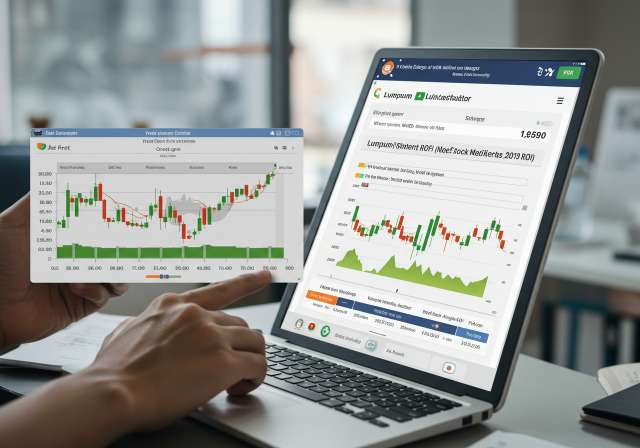
Unlock the world of Indian stock markets! Learn how to open a share trading account and start investing. Demystifying the process of opening an online account t
Unlock the world of Indian stock markets! Learn how to open a share trading account and start investing. Demystifying the process of opening an online account to buy shares in india, brokerage charges, and smart trading tips for beginners. Start your investment journey today!
Share Trading Account: Your Gateway to the Indian Stock Market
Understanding the Basics of Share Trading
The Indian stock market, comprising the National Stock Exchange (NSE) and the Bombay Stock Exchange (BSE), offers a plethora of opportunities for investors to grow their wealth. But before you can participate in this dynamic environment, you need a share trading account. This account acts as a bridge, allowing you to buy and sell shares of publicly listed companies.
Think of it like this: your savings account holds your money, and your share trading account holds your shares (or, more accurately, represents your ownership of those shares). Understanding this fundamental concept is the first step toward becoming a successful investor.
The Securities and Exchange Board of India (SEBI) regulates the Indian stock market, ensuring fair practices and investor protection. SEBI’s regulations are crucial for maintaining the integrity and transparency of the market, giving investors confidence in their investments.
Why You Need a Share Trading Account
You might be wondering, “Why can’t I just walk into a company and buy shares directly?” The answer lies in the efficiency and accessibility that trading accounts provide. Here’s why you absolutely need one:
- Convenience: Trading accounts offer a user-friendly platform to buy and sell shares from anywhere, at any time (within market hours). You can execute trades with a few clicks on your computer or smartphone.
- Access to Market Data: Reputable brokerage firms provide real-time market data, charts, and analysis tools to help you make informed investment decisions.
- Secure Transactions: Trading accounts are secured with robust security measures to protect your investments and personal information.
- Compliance: Trading accounts ensure that all your transactions are compliant with SEBI regulations.
- Holding Your Investments: Your shares are held in a dematerialized (demat) form, which is a safe and convenient way to store your securities electronically.
Opening a Share Trading Account: A Step-by-Step Guide
Opening a share trading account is now a relatively straightforward process, thanks to online platforms. Here’s a step-by-step guide to help you navigate the process:
1. Choose a Brokerage Firm
The first and most crucial step is selecting a brokerage firm. Consider these factors when making your choice:
- Brokerage Charges: Compare brokerage charges across different firms. Some offer a percentage-based commission, while others offer a flat fee per trade. Newer discount brokers often have much lower brokerage fees than traditional full-service brokers.
- Account Opening Fees: Check if there are any account opening or maintenance fees.
- Trading Platform: Evaluate the user-friendliness and features of the trading platform. Does it offer the tools and resources you need for informed decision-making? Look for platforms with good charting tools and analysis features.
- Customer Support: Ensure the firm provides reliable customer support through phone, email, or online chat.
- Research and Advisory Services: If you’re a beginner, consider a firm that offers research reports and advisory services.
- Reputation: Check the reputation of the brokerage firm and look for any complaints or disciplinary actions against them.
2. Gather Required Documents
You’ll need the following documents to open a trading account:
- Proof of Identity (POI): PAN card, Aadhaar card, Passport, Voter ID card, Driving License
- Proof of Address (POA): Aadhaar card, Passport, Voter ID card, Driving License, Utility bills (electricity, telephone, gas)
- PAN Card: Mandatory for trading in the Indian stock market.
- Bank Account Details: Bank statement, cancelled cheque.
- Income Proof (for derivatives trading): Bank statement, ITR acknowledgement.
3. Fill Out the Application Form
You can usually fill out the application form online. Provide accurate information and carefully review all the details before submitting.
4. Complete the KYC (Know Your Customer) Process
KYC is a mandatory process to verify your identity and address. You can complete the KYC process online through video verification or by visiting the brokerage firm’s office.
5. Account Activation
Once your application is verified and KYC is completed, your trading account will be activated. You will receive your account details, including your user ID and password.
Understanding Brokerage Charges
Brokerage charges are fees charged by the brokerage firm for executing trades on your behalf. Understanding these charges is essential for managing your investment costs.
There are primarily two types of brokerage structures:
- Percentage-Based Commission: The brokerage firm charges a percentage of the transaction value. This model is more common with full-service brokers.
- Flat Fee per Trade: The brokerage firm charges a fixed fee for each trade, regardless of the transaction value. This model is popular with discount brokers.
In addition to brokerage charges, you may also incur other fees, such as:
- STT (Securities Transaction Tax): A tax levied by the government on transactions in the stock market.
- Stamp Duty: A tax levied by the state government on the transfer of securities.
- Exchange Transaction Charges: Fees charged by the stock exchanges (NSE and BSE).
- SEBI Turnover Fees: Fees charged by SEBI.
- DP Charges: Fees charged by the Depository Participant (DP) for debiting securities from your demat account.
Types of Trading Accounts in India
While the core function of a trading account remains the same, there are a few variations available in India to cater to different needs:
- Demat Account: This is the core account where your shares are held in electronic form. It’s essential for trading in equity shares.
- Trading Account: This is the account you use to place buy and sell orders. It’s linked to your demat account.
- 3-in-1 Account: This combines a savings account, a demat account, and a trading account, offered by some banks and financial institutions. This can streamline your transactions and offer added convenience.
Investment Strategies and Tips for Beginners
Once you have your share trading account set up, it’s time to start investing. Here are a few tips and strategies for beginners:
- Start Small: Begin with a small amount of money that you’re comfortable losing. This will allow you to learn the ropes without risking a significant portion of your capital.
- Do Your Research: Before investing in any company, thoroughly research its financials, business model, and industry outlook.
- Diversify Your Portfolio: Don’t put all your eggs in one basket. Diversify your investments across different sectors and asset classes to reduce risk. Consider investing in mutual funds, which offer diversification by investing in a basket of stocks.
- Invest for the Long Term: The stock market can be volatile in the short term. Focus on long-term investments to weather the ups and downs of the market.
- Consider SIPs (Systematic Investment Plans): SIPs allow you to invest a fixed amount of money at regular intervals, such as monthly or quarterly. This helps you average out your purchase price and benefit from rupee cost averaging. Many investors use SIPs to invest in Equity Linked Savings Schemes (ELSS) for tax benefits under Section 80C of the Income Tax Act.
- Avoid Emotional Investing: Don’t make investment decisions based on fear or greed. Stick to your investment plan and avoid making impulsive decisions.
- Stay Informed: Keep up-to-date with market news and developments. Follow reputable financial news sources and analysts.
- Rebalance Your Portfolio Regularly: Periodically review your portfolio and rebalance it to maintain your desired asset allocation.
- Understand Tax Implications: Be aware of the tax implications of your investments. Consult a tax advisor for guidance. Income from equity investments (both dividends and capital gains) is taxable.
Beyond Equity: Exploring Other Investment Options
While equity shares are a popular investment option, the Indian financial market offers a wide range of other investment instruments, including:
- Mutual Funds: A popular investment option that pools money from multiple investors and invests it in a diversified portfolio of stocks, bonds, or other assets.
- Bonds: Debt instruments issued by governments or corporations to raise capital.
- PPF (Public Provident Fund): A government-backed savings scheme that offers tax benefits and a guaranteed return.
- NPS (National Pension System): A retirement savings scheme that allows you to build a retirement corpus.
- Real Estate: Investing in property can provide rental income and potential capital appreciation.
- Gold: A traditional investment option that is considered a safe haven asset.
Conclusion: Start Your Investment Journey Today
Opening a share trading account is the first step towards participating in the Indian stock market and building your wealth. By understanding the basics of trading, choosing the right brokerage firm, and following sound investment strategies, you can achieve your financial goals. Remember to start small, do your research, and invest for the long term. The Indian stock market offers exciting opportunities for investors of all levels, so don’t hesitate to start your investment journey today!


